Accountability isn’t a buzzword—it’s a competitive advantage. In 2025, the organizations winning the talent, productivity, and innovation battles are the ones creating high-accountability cultures rooted in clarity, real-time data, and continuous coaching.
But here’s the challenge: most companies believe they have an accountability problem when what they really have is a visibility problem.
Performance Scoring solves this by connecting data → behavior → coaching → outcomes into one ecosystem that employees and leaders actually want to use.
⭐ Accountability Begins With Visibility
Harvard Business Review found that employees are 23% more likely to meet expectations when they receive consistent clarity and data around performance.
(Source: https://hbr.org/2023/03/the-power-of-clear-expectations)
Performance Scoring elevates clarity by providing:
- Real-time ScoreCards for every user (https://performancescoring.com/application/meeting-management/meeting-scorecards/)
- Factor-based scoring to measure what truly matters
- Transparent progress tracking across teams and roles
- Data-driven meetings that reinforce accountability (https://performancescoring.com/meeting-management/)
When teams can see where they stand, accountability becomes less about policing—more about empowerment.
⭐ Transparency Turns Accountability Into a Shared Responsibility
In many organizations, accountability feels top-down. But with transparency, it becomes a shared ownership model.
Performance Scoring reinforces transparency through:
- Open visibility into tasks and deadlines (https://performancescoring.com/task-management/)
- Team performance insights via the ScoreBoard
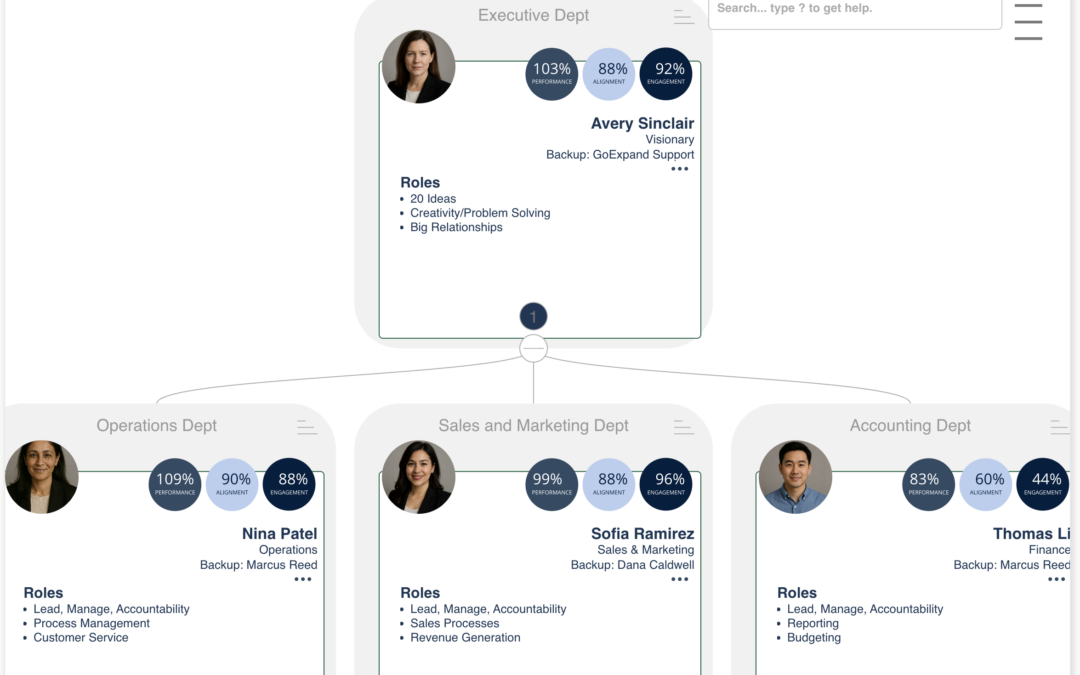
- Dynamic Org Charts that contextualize performance
- Feedback and recognition tools (https://performancescoring.com/feedback/)
According to McKinsey, organizations that create transparent performance ecosystems see a 20–30% improvement in cross-team coordination. Transparency reduces friction, reduces assumptions, and accelerates results.
⭐ Coaching Makes Accountability Sustainable
Data alone doesn’t change behavior—coaching does.
Unfortunately, most leaders either coach too little or too late. But with Performance Scoring, coaching becomes proactive and continuous, not reactive and annual.
Using:
- Real-time feedback loops
- Review and coaching modules (https://performancescoring.com/reviews/)
- Meeting management prompts for coaching conversations
- Shout-Outs for reinforcing positive performance
(https://performancescoring.com/employee-engagement/)
Leaders can coach using current, measurable performance—not memory or opinion.
MIT Sloan research shows that real-time coaching increases engagement and performance by 19%+.
⭐ The Accountability Flywheel: How Performance Scoring Creates Momentum
1. Data reveals what’s happening.
ScoreCards, tasks, reviews, KPIs.
2. Transparency shows everyone the same truth.
No hiding, no surprises, no mixed messages.
3. Coaching aligns people to improve.
Managers coach. Employees self-correct. Teams collaborate.
4. Accountability becomes cultural—not forced.
It’s built into daily workflows, not annual reviews.
This flywheel accelerates week over week, transforming accountability from a pain point into a superpower.
⭐ If Accountability Is a Goal, Data Must Be the Foundation
You cannot improve what you can’t see.
You cannot sustain what you don’t coach.
You cannot scale what you don’t measure.
Performance Scoring gives organizations the clarity, tools, and structure needed to embed accountability into every meeting, every role, and every action.
👉 If you’re ready to build a high-accountability culture, talk to our team:
https://performancescoring.com/contact/