Projects are where strategy becomes execution. In Performance Scoring, projects aren’t just lists of tasks—they’re structured workstreams that live inside your meetings and stay connected to accountability, performance, and follow-through.
This guide walks through what projects are, why they matter, how to create one, and how to manage projects effectively during meetings.
What Is a Project in Performance Scoring?
A project is a structured collection of related work designed to achieve a specific outcome, managed directly within Performance Scoring’s project and task management tools.
Projects are used to organize initiatives that require coordination over time—whether that’s launching a new process, improving workflows, or driving a strategic priority forward.
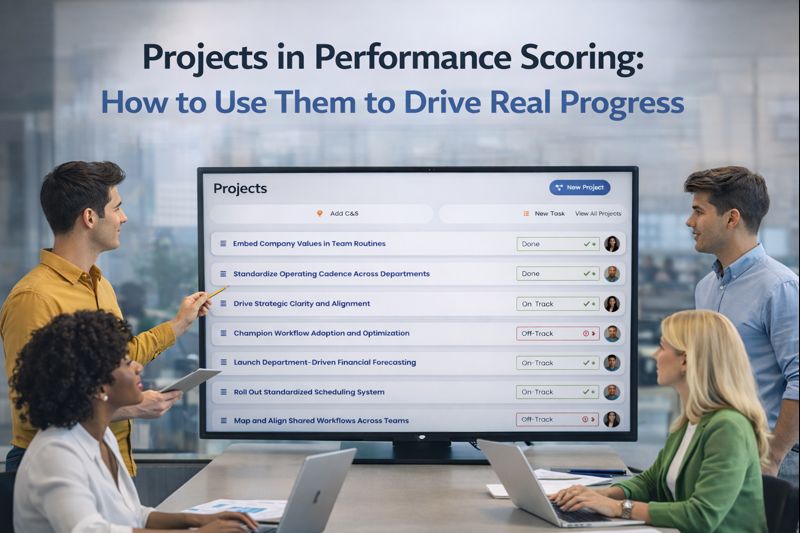
Each project includes a clear name and objective, an owner, tasks and action items, and a visible status such as on-track, off-track, or done. This structure makes it easy for everyone to understand what’s being worked on and who’s responsible.
Why Projects Matter
Projects help teams move from talking about work to actually completing it by staying connected to meeting management and real-time accountability.
Instead of relying on memory, notes, or follow-up emails, projects clarify priorities, create ownership, make progress visible, reduce missed commitments, and keep meetings focused on outcomes. When projects are reviewed regularly in meetings, teams spend less time recapping and more time making decisions.
How to Create a Project
Projects can be created ahead of time or directly during a meeting—whenever new work emerges.
To create a project, navigate to the Projects area inside a meeting or workspace, select New Project, name the project based on the desired outcome, assign an owner, add tasks or next actions, and set an initial status.
Creating projects in the moment prevents ideas from getting lost and ensures work is captured while context is still fresh.
How Projects Help Inside Meetings
Meetings are where projects gain momentum—especially when they’re reviewed alongside goals, updates, and performance management data.
Rather than discussing work in the abstract, teams can see project status in real time, identify blockers immediately, adjust priorities on the spot, and assign next actions before moving on. This turns meetings into working sessions instead of status updates.
Managing Projects During Meetings
Projects are most effective when they’re reviewed consistently and intentionally.
Best practices for managing projects in meetings include adding Projects as a recurring agenda item, focusing on active or off-track projects, updating statuses live during the discussion, and assigning clear next steps before closing the topic. If a project goes off-track, the meeting becomes the place to clarify expectations, reassign resources, or reset timelines—without extra follow-ups later.
Projects as a Single Source of Truth
Because projects live inside the meeting platform, they remain connected to tasks, ownership, and performance conversations. Everyone sees the same information, and nothing lives in a separate spreadsheet or disconnected tool.
This creates alignment, accountability, and momentum without adding complexity.
Turning Meetings into Momentum
Projects are the bridge between planning and execution. When they’re created and managed inside meetings, every conversation leads to clear ownership and measurable progress.
With Performance Scoring, projects don’t sit outside your meetings—they move forward because of them.
References and further reading:
- Four techniques to facilitate effective project meetings — a PMI article with practical methods for improving project meeting outcomes. 4 Techniques to Facilitate Effective Project Meetings (PMI)
- Successful Project Meetings: Templates and Best Practices 2025 — templates and best practices for organizing project meetings that keep teams aligned. Successful Project Meetings: Templates and Best Practices
- Project Meetings: 9 Key Strategies for Effective Execution — nine actionable strategies for making project meetings more productive and outcomes-focused. Project Meetings: 9 Key Strategies for Effective Execution
- 10 Project Meetings to Guide Your Project Management Team — overview of different project meeting types and how they support planning and execution. 10 Project Meetings to Guide Your Project Management Team