Most companies have an Org Chart.
At a basic level, it answers a pretty simple question:
Who reports to whom?
That’s useful. But if that’s all your Org Chart tells you, you’re only seeing part of the picture.
An organizational structure should help leadership understand more than reporting relationships. It should provide clarity around people, responsibilities, skills, performance, and where gaps may exist across the organization.
Because knowing where someone sits in the company is one thing.
Knowing whether the right person is sitting in the right seat and has what they need to succeed is something entirely different.
Your Org Chart Should Create Clarity
Think about a traditional Org Chart.
CEO at the top.
Leadership underneath.
Managers.
Departments.
Employees.
Lines connect everyone together.
It gives you structure, but how much does it actually tell you about the business?
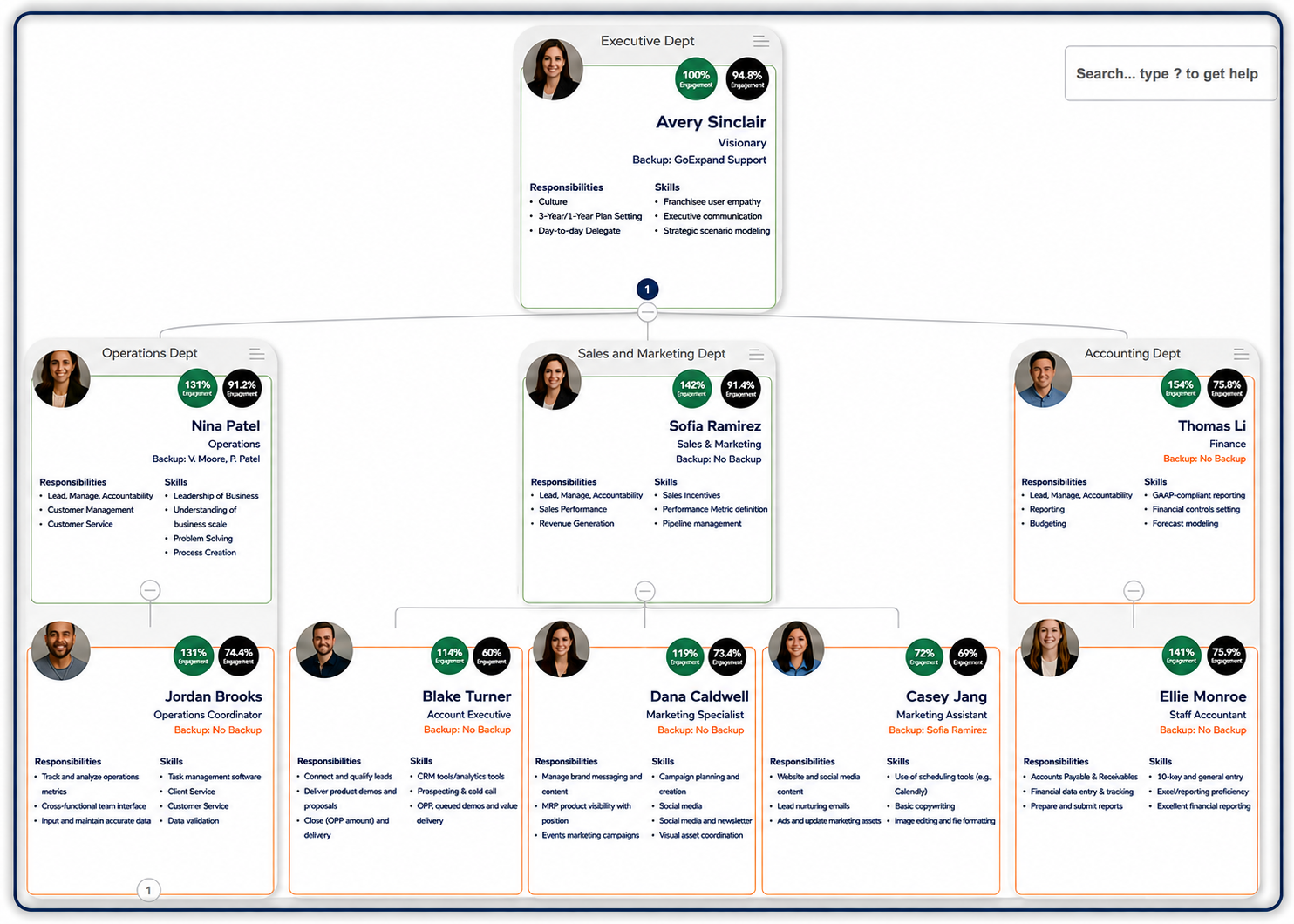
Can you see what each person is responsible for?
Can you identify the skills required for their position?
Can you understand how they’re performing?
Can you spot positions without adequate backup?
Can you quickly see where responsibilities overlap?
Those are the questions that turn an Org Chart from a static diagram into a useful organizational visibility tool.
Start With Responsibilities, Not Just Titles
Job titles don’t always tell the full story.
Two people with the same title can have very different responsibilities.
And as companies grow, employees often take on responsibilities that aren’t reflected in their original job descriptions.
That’s why clarity around responsibilities matters.
When someone looks at a position in your organization, they should be able to understand:
What is this person responsible for?
That creates clarity for leadership, managers, and the employee.
It can also expose problems that aren’t obvious from the reporting structure alone.
Maybe two people believe they own the same responsibility.
Maybe an important responsibility doesn’t have an owner at all.
Maybe someone has accumulated far more responsibilities than originally intended.
You can’t address those gaps until you can see them.
What Skills Does the Position Require?
Responsibilities tell you what needs to be done.
Skills help answer whether the person has the capabilities needed to do it successfully.
Imagine you’re looking at a leadership position.
Beyond the title, what does success in that position actually require?
Strategic thinking?
Financial knowledge?
People leadership?
Sales experience?
Project management?
Technical expertise?
Communication?
The answer will be different for every position.
Documenting those skills creates another layer of organizational clarity.
It can help leaders identify where someone is already strong, where development may be needed, and where the organization may have a larger capability gap.
Connect Structure to Performance
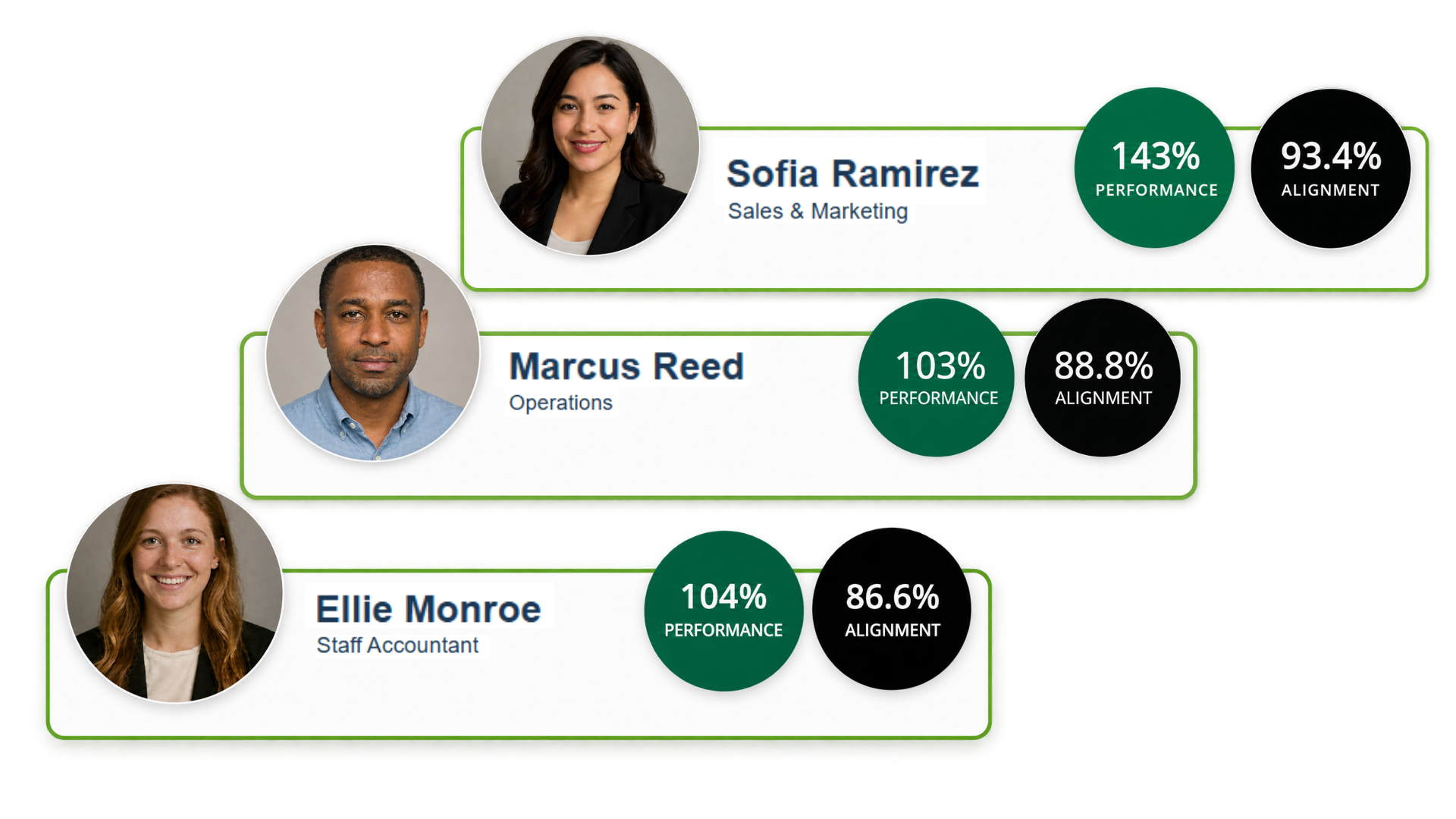
This is where an Org Chart can become much more valuable.
Imagine looking at your organizational structure and being able to see performance information alongside the people responsible for the work.
Now you’re not just seeing:
This person reports to this manager.
You’re beginning to see:
This is what they’re responsible for, these are the skills associated with their position, and this is how they’re performing.
That context can create much better leadership conversations.
Instead of evaluating performance in isolation, managers can look at the person in the context of their responsibilities and position within the organization.
Performance Isn’t the Only Thing That Matters
A high performer isn’t automatically someone who is fully aligned or engaged.
Likewise, someone struggling with a particular Metric may still be highly engaged and contributing significant value in other areas.
That’s why looking at a person through only one number can be misleading.
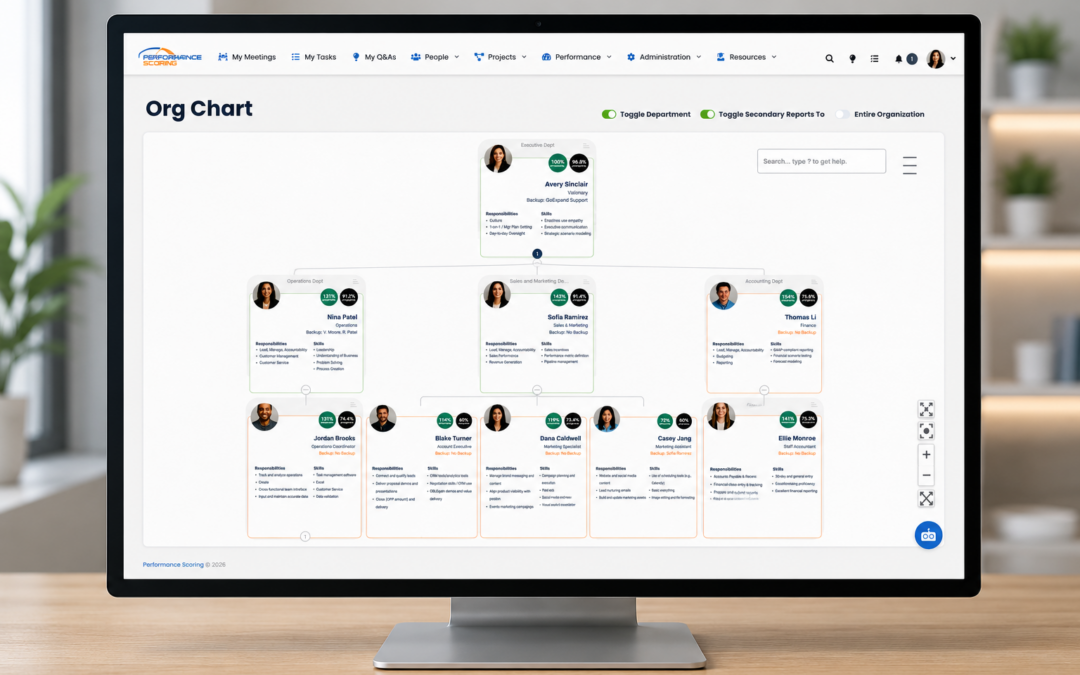
Performance Scoring’s Org Chart can give leaders additional visibility into areas such as Performance, Alignment, and Engagement directly within the organizational structure.
That provides a broader perspective.
The goal isn’t to reduce an employee to a score.
It’s to give managers another signal that can help them know where a conversation may be needed.
The Org Chart Can Reveal Business Risk
There’s another question leaders don’t always think about until it becomes a problem:
What happens if this person isn’t here tomorrow?
Maybe someone takes an extended leave.
Maybe a key employee leaves the company.
Maybe someone gets promoted.
Maybe the business grows and responsibilities need to shift.
Who can step in?
Which positions have adequate backup?
Where does too much institutional knowledge live with one person?
Your organizational structure can help expose these risks.
For example, identifying backup coverage for important positions can give leadership a clearer view of where the company may be vulnerable.
That’s more than people management.
That’s business continuity.
What About the Organization You’ll Need Tomorrow?
Your current Org Chart tells you how the business is structured today.
But what happens when the company grows?
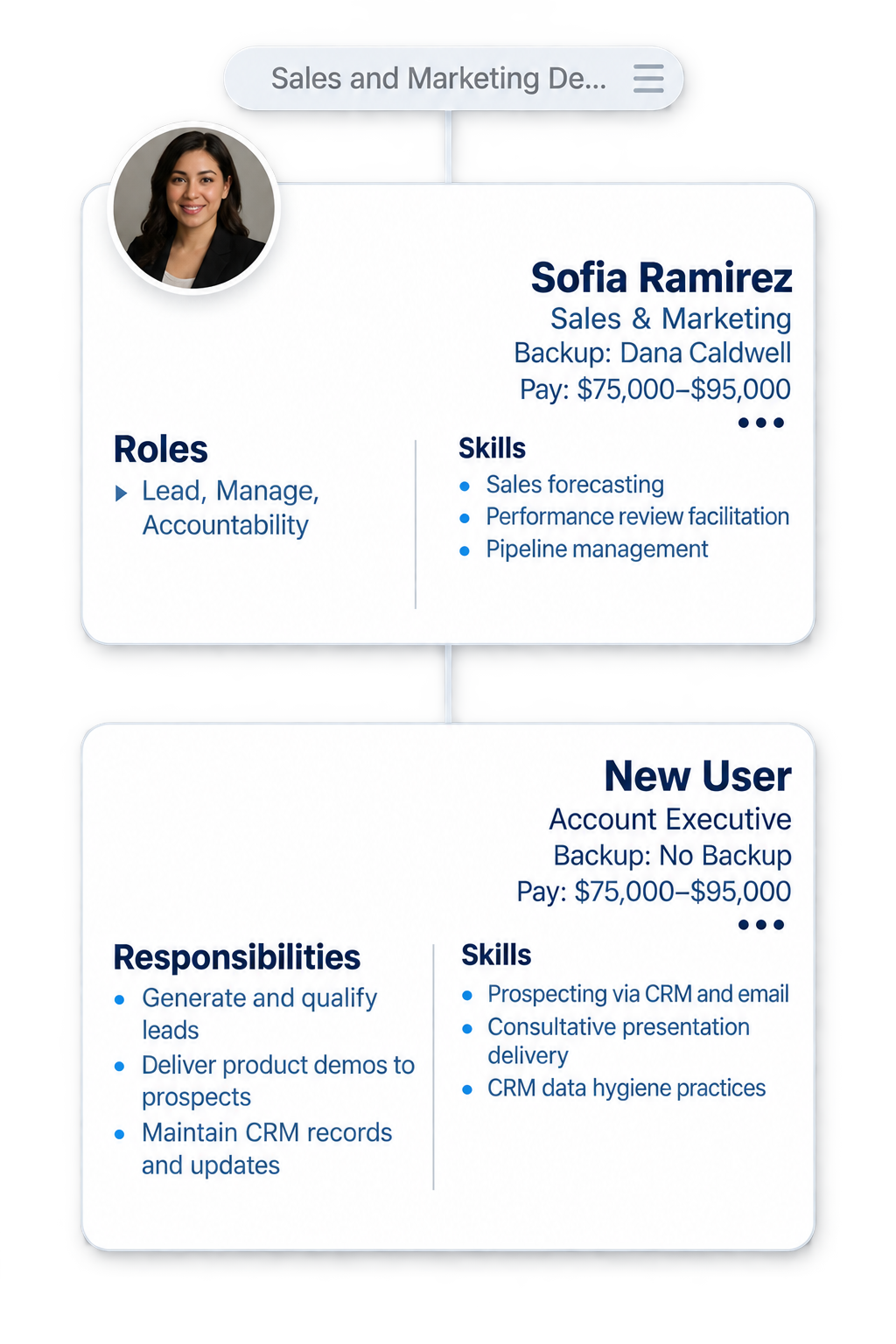
Maybe you’re planning to enter a new market.
Add another location.
Build a new department.
Double revenue.
Introduce a new service.
The structure that works today may not be the structure you need two years from now.
This is where a Future Org Chart can become especially useful.
Instead of waiting until growth forces organizational changes, leadership can begin thinking ahead.
What positions will we need?
What responsibilities will exist?
Where will leadership need to expand?
Which positions could potentially be filled by current employees?
Where might we need to recruit externally?
Now organizational planning becomes part of your broader business strategy.
Your People and Your Business Plan Should Connect
Earlier in this series, we talked about connecting the Business Plan to execution.
Your people are part of that connection.
If the company has ambitious growth goals, the organization needs the people and structure capable of supporting them.
That creates another important relationship:
Business Plan → Future Structure → People → Responsibilities → Performance
If your strategy says where the company is going, your organizational structure should help answer:
Do we have the people and capabilities to get there?
How Performance Scoring Expands the Org Chart
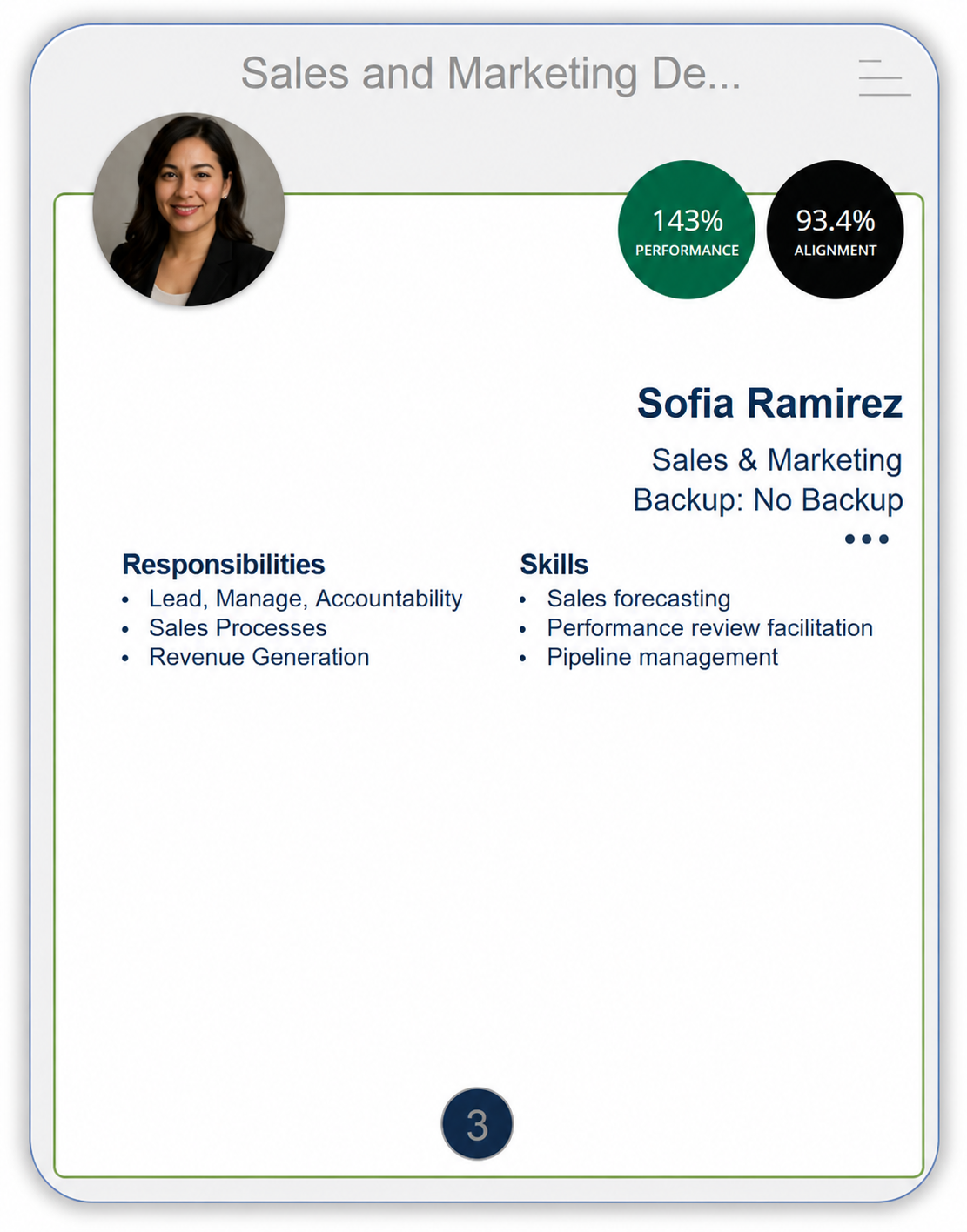
Performance Scoring takes the traditional Org Chart beyond boxes and reporting lines.
Leaders can create greater visibility into the people behind the structure, including areas such as:
- Reporting relationships
- Departments and positions
- Responsibilities
- Skills
- Backup coverage
- Performance
- Alignment
- Engagement
- Current organizational structure
- Future organizational planning
Instead of looking at your Org Chart as something you update when someone gets hired or promoted, it can become an active leadership tool.
One that helps you better understand the organization you have today and prepare for the organization you’ll need tomorrow.
Put Your Org Chart to the Test
Pull up your company’s Org Chart and choose any position.
Then ask yourself:
How much can I actually learn about this position and the person in it?
Can you see what they’re responsible for?
Do you understand the skills required?
Can you see how their work connects to company performance?
Do you know whether there’s backup coverage?
Can you identify potential gaps?
And if you’re planning for growth:
Can you see where this position fits into the organization you’re building for the future?
If your Org Chart only tells you who reports to whom, there may be an opportunity to make it much more useful.
See the People More Clearly
This article kicks off Week 3: See the People in our September See Your Business More Clearly series.
During Week 1, we looked at the business.
During Week 2, we followed the work through Meetings, Projects, Tasks, and Metrics.
Now we’re looking at the people responsible for making all of it happen.
Next, we’ll explore:
What Does Employee Performance Really Look Like?
Because employee performance is rarely represented accurately by a single Metric, annual review, or gut feeling.
We’ll look at how bringing multiple performance signals together can help managers see a clearer picture and have better conversations with their people.
Ready to See More Than Reporting Lines?
Performance Scoring connects your Org Chart, responsibilities, skills, performance insights, Business Plan, Projects, Metrics, and people development to give leadership greater visibility into the organization behind the results.
Visit PerformanceScoring.com or email us at support@performancescoring.com to learn more or take the 30-Day Business Challenge and experience the platform with your own team.
References and further reads:
- McKinsey & Company – Organizational Health: A Fast Track to Performance Improvement
McKinsey article - Harvard Business Review – Making Your Strategy Work on the Frontline
Harvard Business Review article - MIT Center for Information Systems Research – Build Business Advantage With Real-Time Decision-Making
MIT CISR article