For decades, the annual Performance Review has been a standard part of managing employees.
Once a year, managers and employees sit down to discuss performance, accomplishments, challenges, goals, and areas for improvement.
There’s nothing inherently wrong with that conversation.
The problem is the waiting.
If an employee needs coaching in February, why wait until December to talk about it?
If someone is doing exceptional work in April, why wait months to recognize it?
If priorities change in June, should an employee continue working toward goals that no longer reflect what the business needs?
Performance happens every day.
Performance management should happen throughout the year too.
The Problem With Looking Back Once a Year
Think about everything that happens during 12 months.
Projects start and finish.
Responsibilities change.
Employees learn new skills.
Goals shift.
Managers change.
Priorities move.
Challenges appear.
People have great months and difficult ones.
Then, at the end of the year, a manager is expected to accurately summarize all of it.
That’s difficult even for the most attentive manager.
The result can be a Performance Review that’s heavily influenced by whatever happened most recently.
A great first quarter may barely get mentioned.
A problem from three weeks ago may dominate the conversation.
Important coaching conversations may be forgotten entirely.
That’s not necessarily because managers aren’t paying attention.
It’s because a year is a long time to reconstruct from memory.
Performance Reviews Shouldn’t Contain Surprises
One of the simplest ways to evaluate your performance management process is to ask:
Does anything discussed during a Performance Review surprise the employee?
Ideally, the answer should be no.
If an employee has been struggling for six months, the annual review shouldn’t be the first time they hear about it.
If they’re exceeding expectations, they shouldn’t have to wait until review season to know their work is valued.
The formal Performance Review should summarize and build upon conversations that have already been happening.
Not introduce an entirely new version of how the manager believes the employee is performing.
Replace the Annual Event With an Ongoing Rhythm
This doesn’t mean you need to eliminate formal Performance Reviews.
It means the review should become one part of a larger performance management rhythm.
That rhythm might include:
Performance Reviews for structured evaluation.
Check-Ins for regular conversations.
Coaching for development and improvement.
Feedback when something deserves attention.
Recognition when someone does great work.
Metrics for measurable expectations.
Projects and Tasks for visibility into execution and follow-through.
Each serves a different purpose.
Together, they create a much more complete view of employee performance.
Check-Ins Keep Small Things from Becoming Big Things
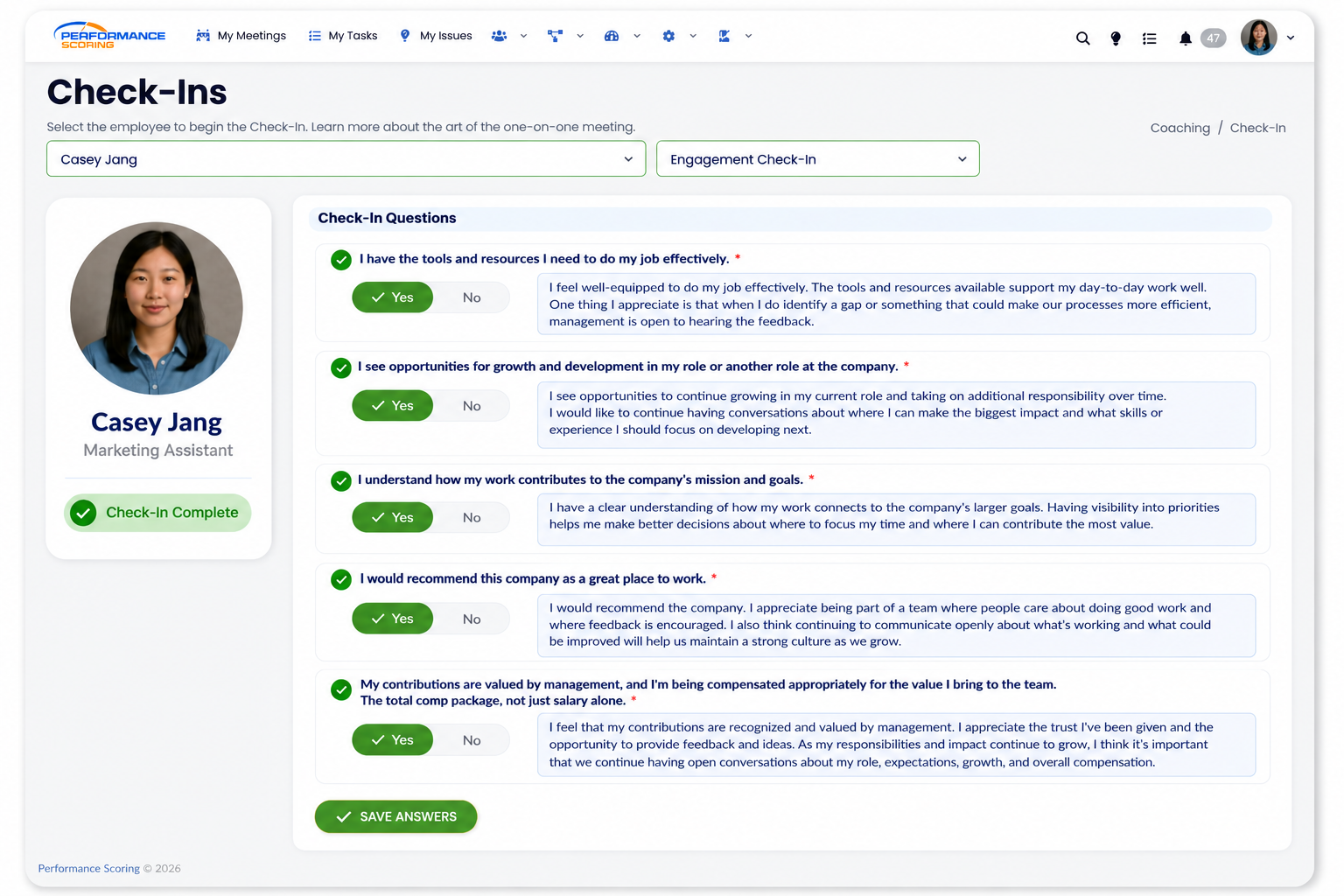
A Check-In doesn’t need to be an hour-long meeting.
Sometimes 15 minutes is enough.
The value comes from creating a consistent opportunity for the manager and employee to communicate.
A Check-In might cover:
- What’s going well?
- What’s getting in your way?
- Do you need anything from me?
- Are your priorities clear?
- Is your workload manageable?
- Is there something you’d like more support with?
- What are you working to improve?
- Is there anything we haven’t talked about that we should?
These conversations give employees a chance to raise concerns before they become bigger problems.
They also give managers a chance to identify where support, clarification, or coaching may be needed.
Coaching Works Better When It’s Timely
Imagine an employee handles a customer situation poorly in March.
The manager notices it.
Nothing is said.
Nine months later, the issue appears on the employee’s Performance Review.
At that point, what is the employee supposed to do with the feedback?
The opportunity to address the behavior when it happened is long gone.
Now imagine the manager addresses it the same week.
They discuss what happened.
The employee provides context.
The manager explains what could have been handled differently.
They agree on what the employee will do next time.
That’s coaching.
And because it happened close to the actual event, it’s much more useful.
Timely coaching turns performance information into development.
Feedback Doesn’t Always Need to Be Negative
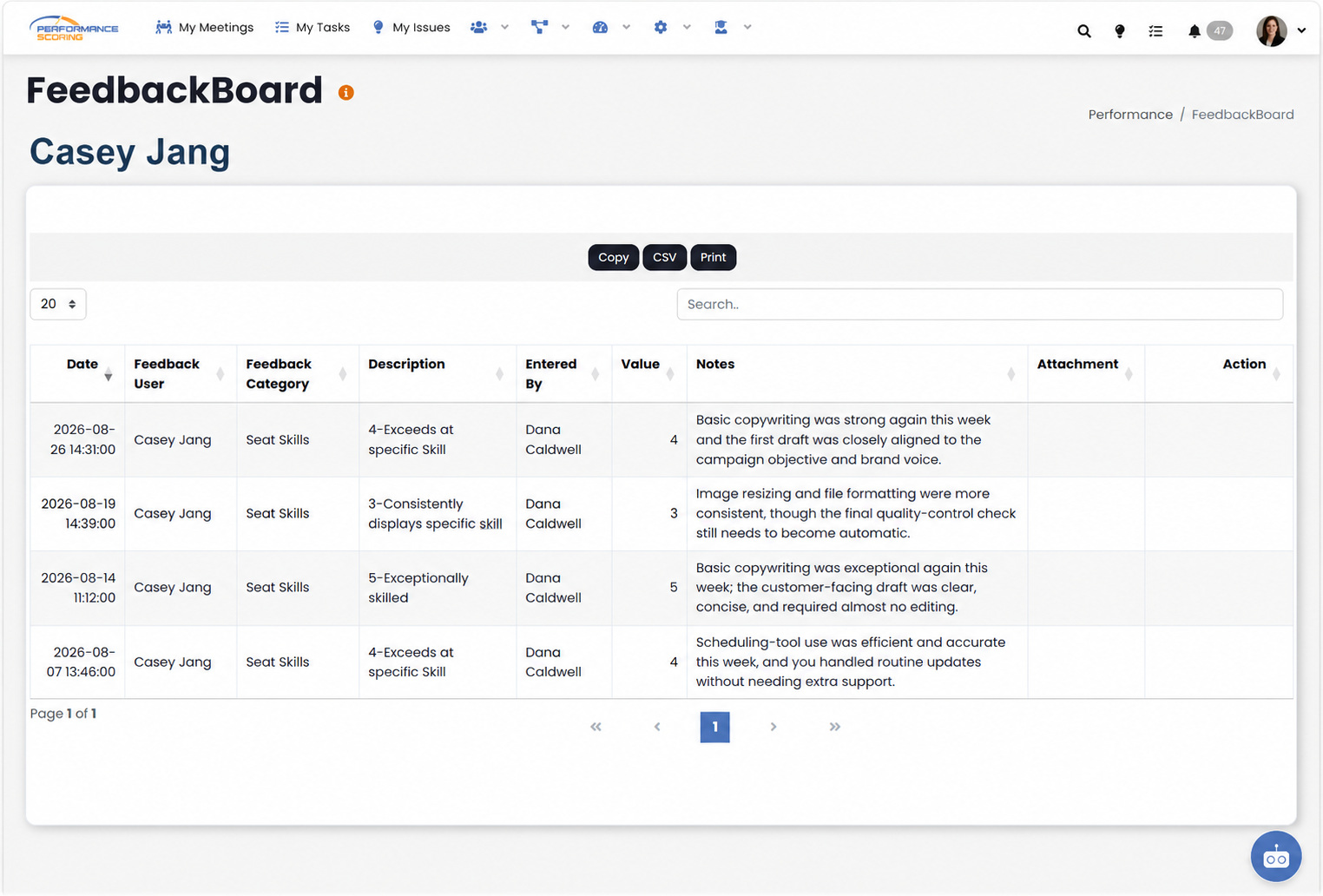
The word feedback often sounds like something bad is coming.
It shouldn’t.
Feedback can reinforce positive behavior just as easily as it can address an improvement opportunity.
Someone handled a difficult client conversation exceptionally well?
Tell them.
A team member stepped up to help finish an important Project?
Recognize it.
An employee significantly improved a Metric they’ve been working on?
Acknowledge the progress.
Someone demonstrated a company value in a meaningful way?
Don’t wait until their next Performance Review to mention it.
Positive feedback helps employees understand what they’re doing well so they can continue doing it.
Recognition Should Happen When the Moment Matters
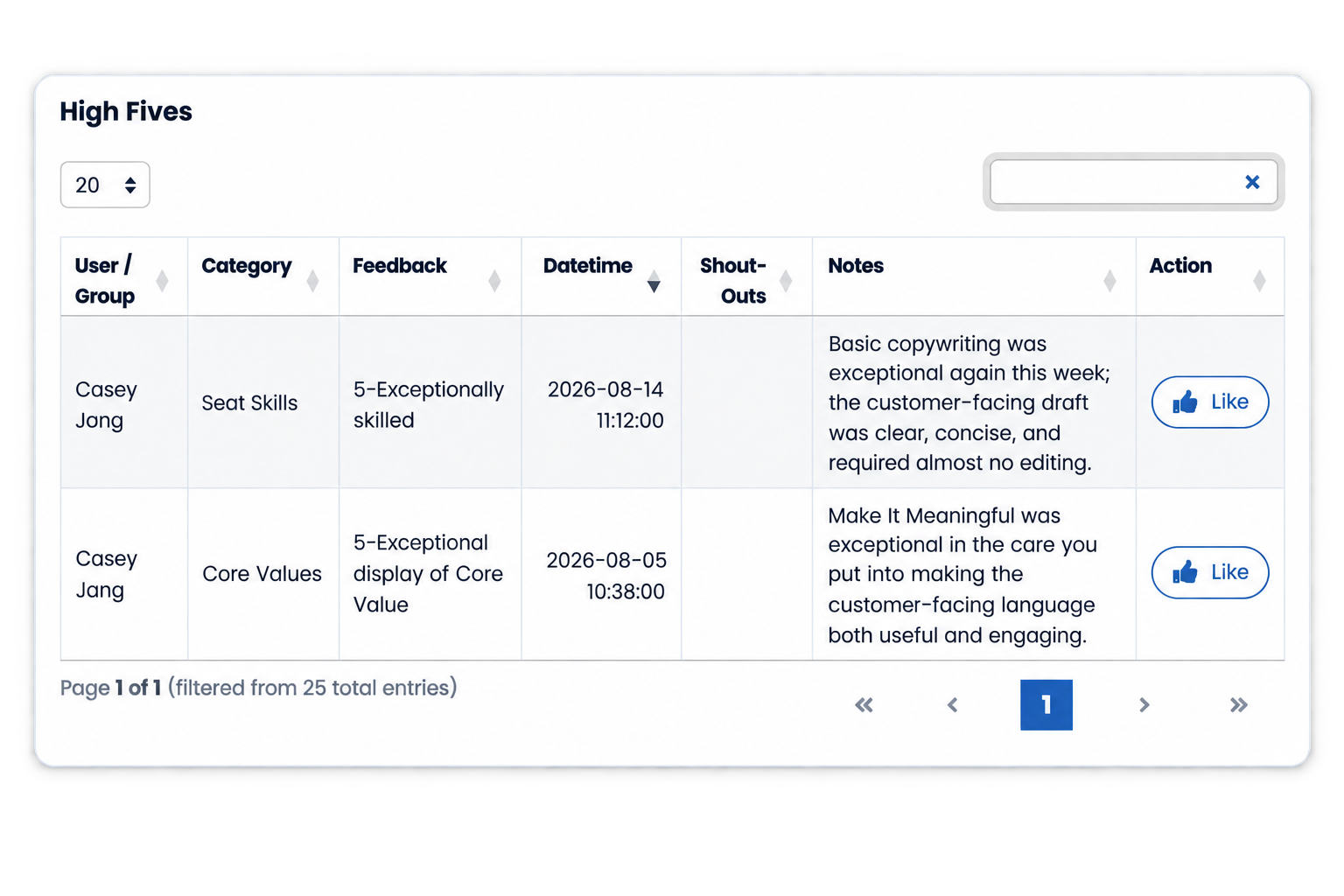
Recognition becomes less meaningful when it’s delayed.
Imagine someone goes above and beyond on an important Project in January.
Eleven months later, their manager says:
You did a great job on that Project earlier this year.
That’s nice.
But it would have meant much more in January.
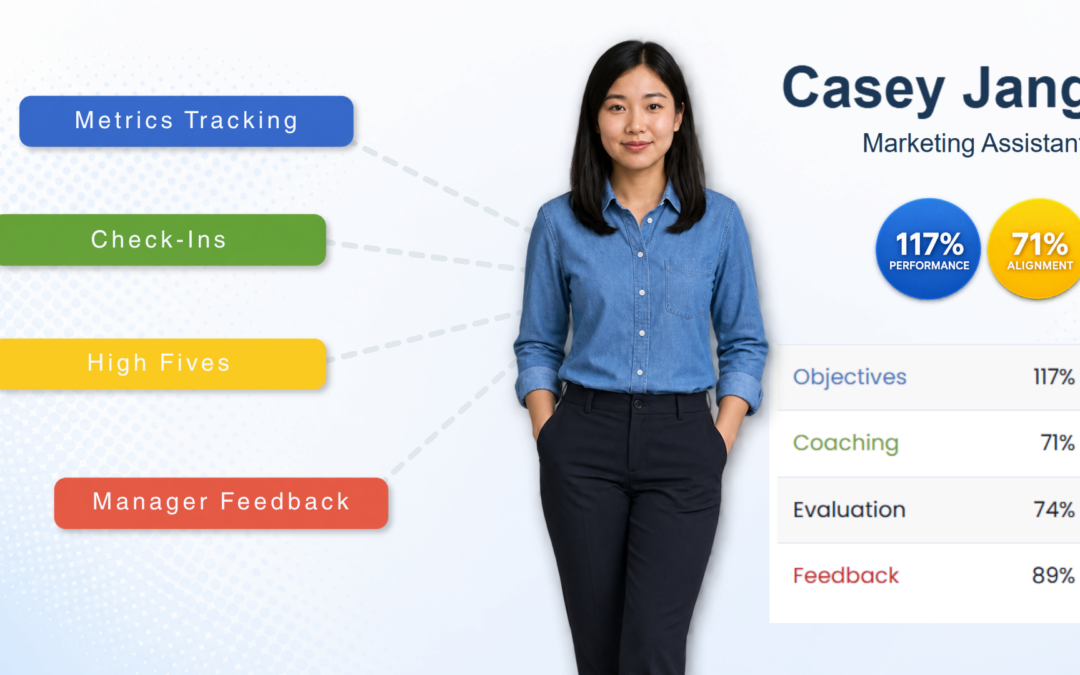
Performance Scoring includes High Fives as a simple way to recognize positive contributions when they happen.
It doesn’t need to be elaborate.
The goal is to make recognition part of the regular employee experience rather than something saved for formal review conversations.
Create a History of Performance
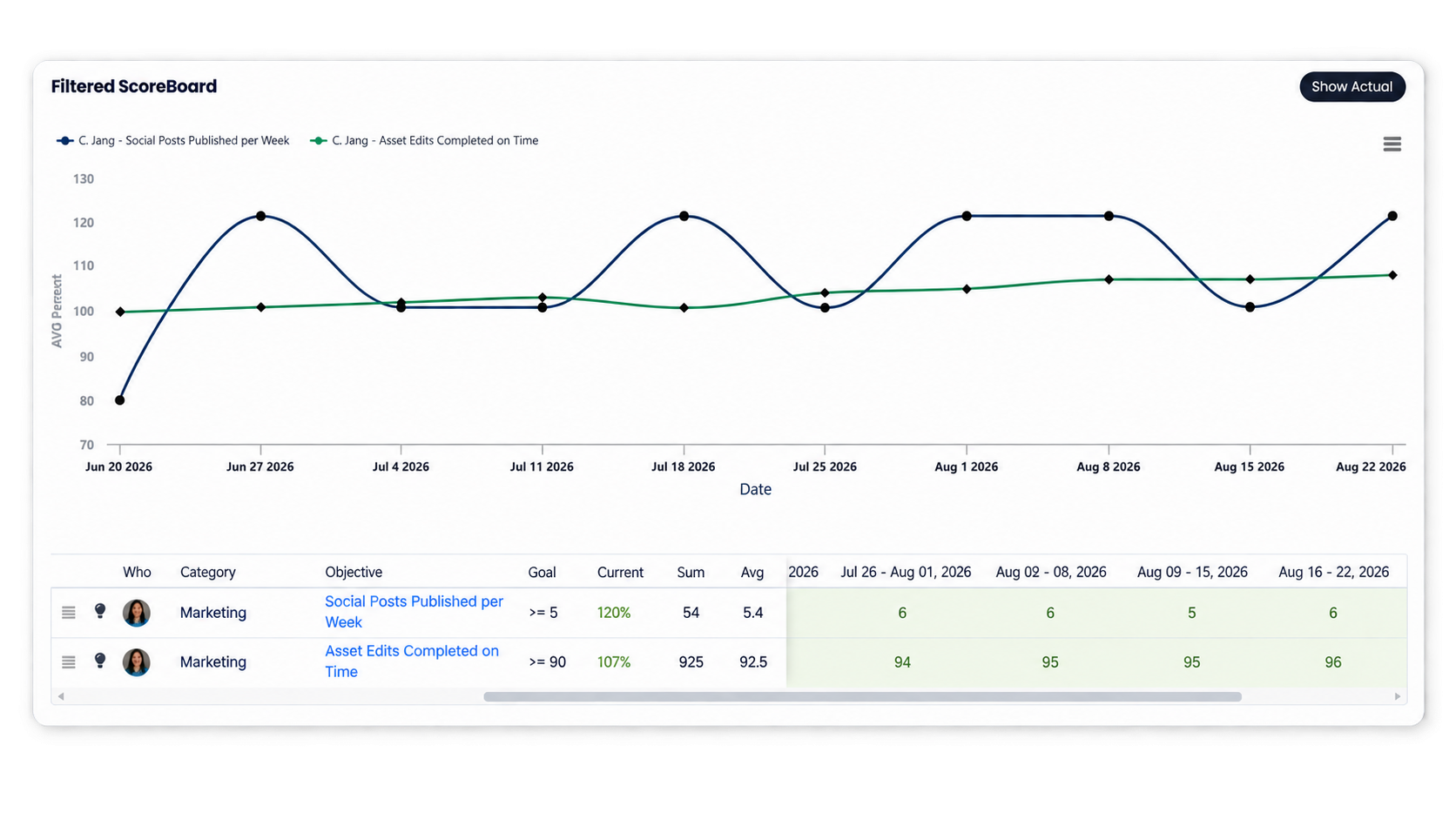
There’s another major advantage to ongoing performance management:
You create context over time.
Instead of reaching review season and trying to remember what happened, managers can look back at a history of performance information and conversations.
What Metrics improved?
Which Projects were completed?
What feedback was given?
What coaching took place?
What was discussed during Check-Ins?
What accomplishments were recognized?
What development areas have been worked on?
Now the Performance Review can be based on a broader picture rather than memory alone.
That’s better for the manager.
And it’s fairer to the employee.
Connect Development to the Person’s Role
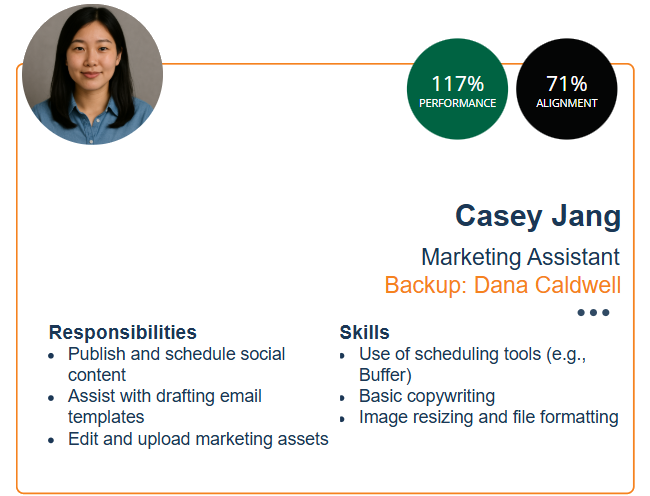
Performance management shouldn’t only focus on what someone did yesterday.
It should also help prepare them for tomorrow.
Earlier in this series, we explored how an Org Chart can include responsibilities and skills associated with a position.
That information can help make development conversations more specific.
Instead of:
You need to work on leadership.
You can identify the particular leadership skills associated with the person’s position.
Then coaching, Check-Ins, and Performance Reviews can help track progress against those expectations.
This creates a clearer connection between:
Role → Expectations → Performance → Coaching → Development
Employees gain a better understanding of what success looks like, while managers have a clearer framework for helping them get there.
Performance Management Should Be a Conversation
Software can organize information.
It can track Metrics.
It can preserve feedback.
It can create Performance Reviews.
It can document Check-Ins.
It can provide visibility into Projects, Tasks, responsibilities, and performance trends.
But software shouldn’t replace leadership.
The purpose of better performance visibility is to help managers have better human conversations.
The platform can show you that something changed.
The manager still needs to ask why.
The data can show progress.
The manager should recognize it.
A Performance Review can organize the information.
The manager and employee still need to discuss what it means.
Technology should support the conversation, not become the conversation.
How Performance Scoring Supports Continuous Performance Management
Performance Scoring brings multiple employee development tools together so performance doesn’t have to live inside a once-a-year process.
Managers can use:
Performance Reviews for structured evaluations.
Check-Ins for more frequent conversations.
Coaching for development and improvement.
Feedback for timely input.
High Fives for recognition.
Metrics for measurable performance.
Projects and Tasks for execution and accountability.
Responsibilities and Skills for clearer expectations.
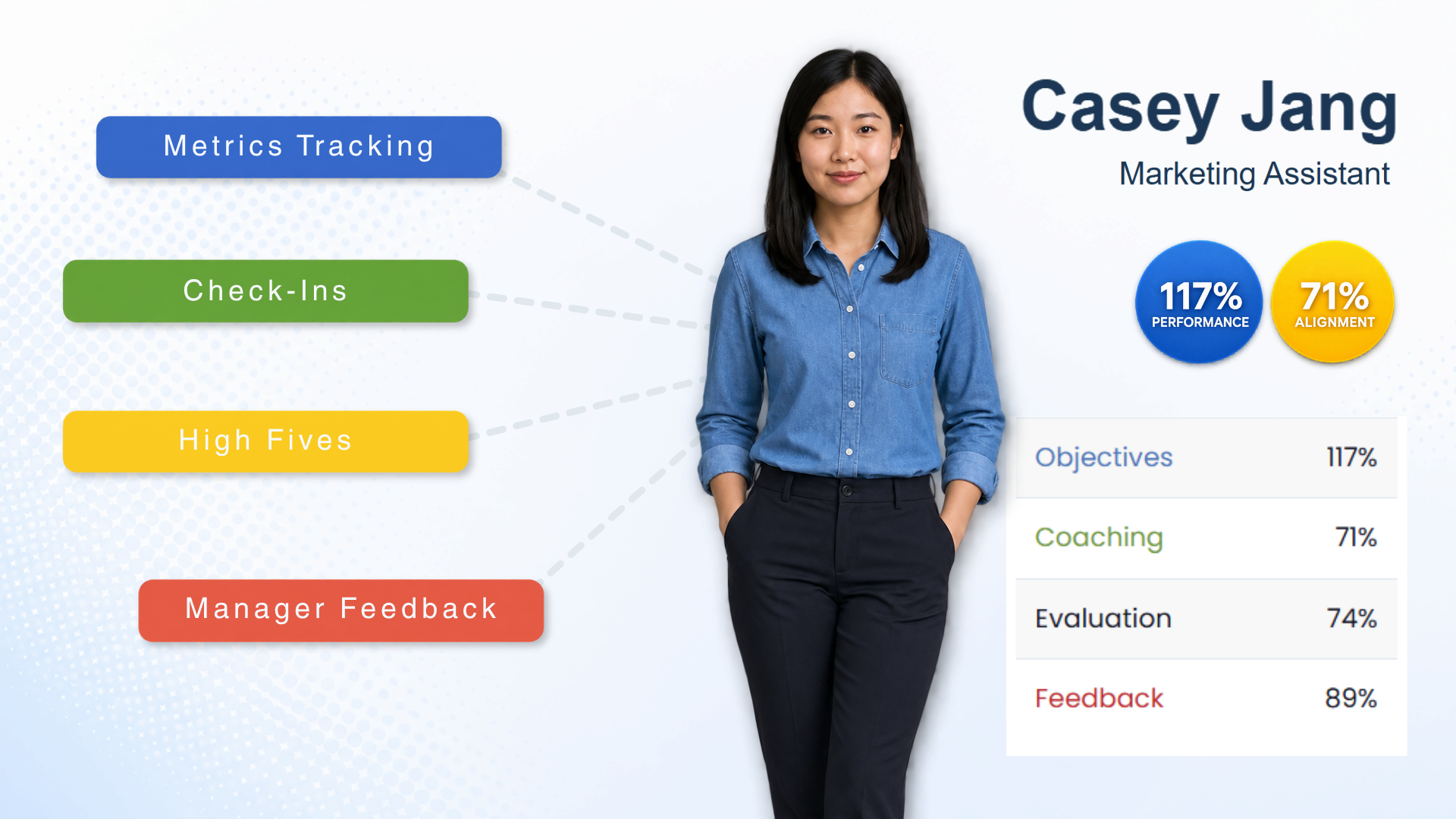
And because these pieces live within the broader Performance Scoring platform, managers can gain more context around the employee and the work they’re responsible for.
The goal isn’t to create more administrative work for managers.
It’s to make the conversations they’re already having more informed, timely, and useful.
Put Your Performance Review Process to the Test
Think about your current review process and ask:
If we eliminated our annual Performance Review tomorrow, how often would managers and employees actually talk about performance?
Weekly?
Monthly?
Quarterly?
Only when something goes wrong?
Maybe hardly at all?
Then ask:
How long could an employee struggle before their manager formally addresses it?
And on the other side:
How long could someone do exceptional work without being recognized?
Those answers can tell you a lot about whether performance management is truly happening throughout your organization.
Because the annual Performance Review isn’t the problem.
Making it the only meaningful performance conversation is.
See the People More Clearly
This continues Week 3: See the People in our September See Your Business More Clearly series.
We’ve looked at how your Org Chart can reveal more about your people and how multiple performance signals can create a clearer picture of how someone is doing.
Now we’ve taken that visibility and turned it into an ongoing conversation.
Next, we’ll look at another question that can have a major impact on employee performance:
Do Your Employees Know What Success Looks Like?
We’ll explore how clear responsibilities, skills, Metrics, expectations, and feedback can help employees better understand what they’re accountable for and how their work contributes to the business.
Ready to Make Performance Management More Continuous?
Performance Scoring connects Performance Reviews, Check-Ins, Coaching, Feedback, High Fives, Metrics, Projects, Tasks, responsibilities, and skills so managers can have better performance conversations throughout the year.
Visit PerformanceScoring.com or email us at support@performancescoring.com to learn more or take the 30-Day Business Challenge and experience the platform with your own team.
References and further reads:
- McKinsey & Company – Organizational Health: A Fast Track to Performance Improvement
McKinsey article - Harvard Business Review – Making Your Strategy Work on the Frontline
Harvard Business Review article - MIT Center for Information Systems Research – Build Business Advantage With Real-Time Decision-Making
MIT CISR article