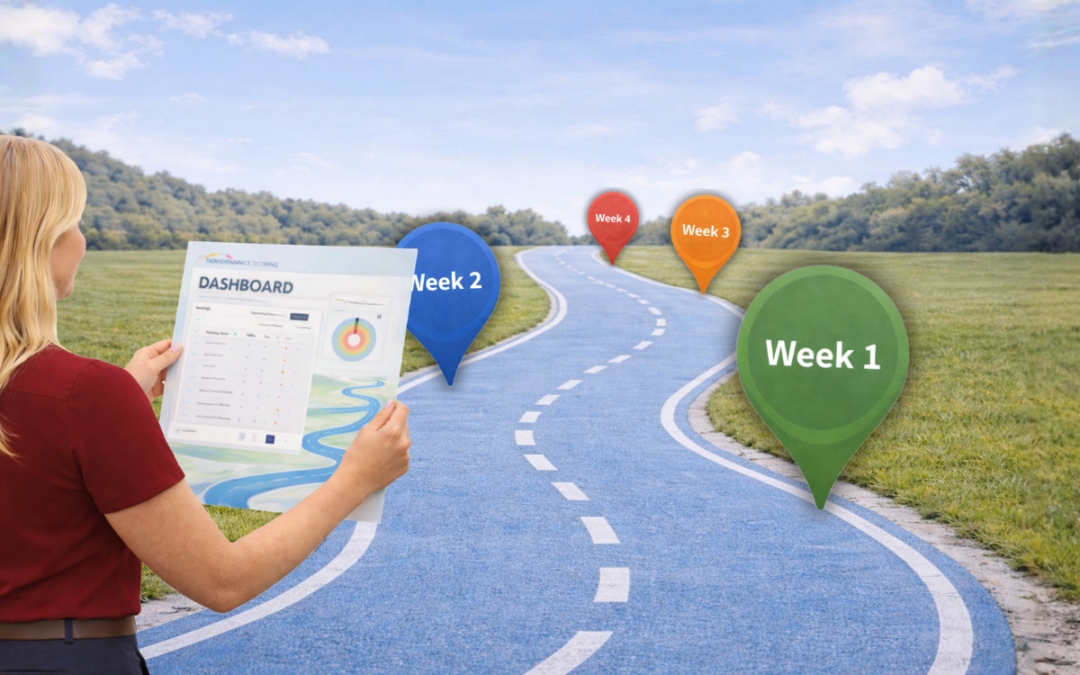
Week 3: Deepening Performance & Alignment
Session 3 — 60 Minutes
This week is about sharpening your performance tools and strengthening leadership alignment.
What We’ll Cover
Organizing Metric Categories
• Grouping metrics for clearer reporting
• Making scorecards easier to review in meetings
• Ensuring each metric has an owner and purpose
Improving Your Scorecard
• Refining weekly performance tracking
• Identifying leading vs. lagging indicators
• Using the Scorecard to spot issues early
Material Covered: Business Plan Overview
Overview of Performance Reviews
• Why performance reviews support accountability
• Connecting role clarity to evaluation
• Establishing a consistent review rhythm
Material Covered: Conduct a Performance Review
Managing Your Business Plan
• Reviewing your strategic plan inside the platform
• Updating priorities and long-term direction
• Keeping the plan aligned with execution
Material Covered: Update Your Business Plan
Vendor (Virtual User) Setup
• When and why to use virtual users
• Assigning ownership for outsourced or shared responsibilities
• Keeping accountability clear even with external support
Optional Tools & Integrations
• Overview of OpenAI integration and AI Assistant features
• How integrations support execution without adding complexity
Material Covered: Using OpenAI & AI Assistant + Integrating Asana
Reinforcing Issue Solving in Meetings
• Surfacing issues through metrics and priorities
• Keeping discussions productive and focused
• Turning problems into clear next actions
By the End of Week 3
Your third Executive Leadership Meeting will be run with minimal to no guidance from our team.
Week 3 Training Q&A
Scorecards & Metrics
Q: Why should we organize metric categories?
A: Categories make the Scorecard easier to scan, help teams stay focused, and improve discussion during meetings.
Q: How do we know if we have the right metrics?
A: Strong metrics are measurable weekly, owned by one person, and directly tied to business health.
Q: What’s the biggest mistake teams make with scorecards?
A: Tracking too many numbers or tracking metrics that don’t drive action.
Performance Reviews
Q: How do performance reviews connect to accountability?
A: Reviews reinforce role ownership and ensure expectations match real performance.
Q: Do performance reviews need to be formal?
A: Not always. The key is consistency, clarity, and follow-through.
Business Plan Management
Q: Why manage the Business Plan inside the platform?
A: It keeps long-term priorities connected to weekly execution and prevents strategic drift.
Q: How often should we update the Business Plan?
A: Most teams review it quarterly, with adjustments as priorities evolve.
Vendor (Virtual Users)
Q: What is a vendor or virtual user?
A: A virtual user represents an outsourced partner or shared function so accountability stays visible in the system.
Q: When should we use a virtual user instead of a person?
A: When work is owned externally or not tied to one internal team member, but still needs tracking.
Tools & Integrations
Q: Do we need to use OpenAI tools right away?
A: No. They’re optional enhancements once your core meeting rhythm is strong.
Q: What’s the benefit of integrating Asana?
A: It helps teams connect existing task workflows without duplicating work.
Meetings & Issue Solving
Q: How do metrics help surface issues?
A: Off-track numbers create early visibility so leadership can solve problems before they grow.
Q: What should feel different by Meeting #3?
A: More confidence, smoother flow, stronger accountability, and less reliance on outside guidance.