Performance Scoring is built on a simple idea: meetings are where work actually happens. Instead of treating meetings as disconnected conversations, the platform turns them into a central hub where goals, performance data, tasks, and accountability come together in one place.
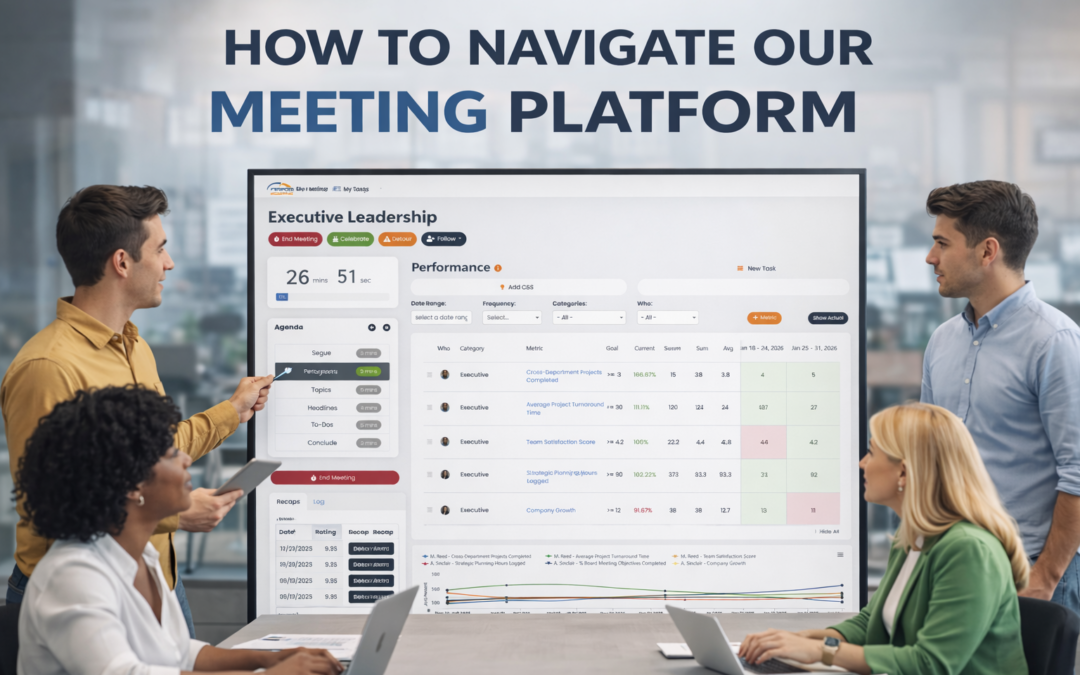
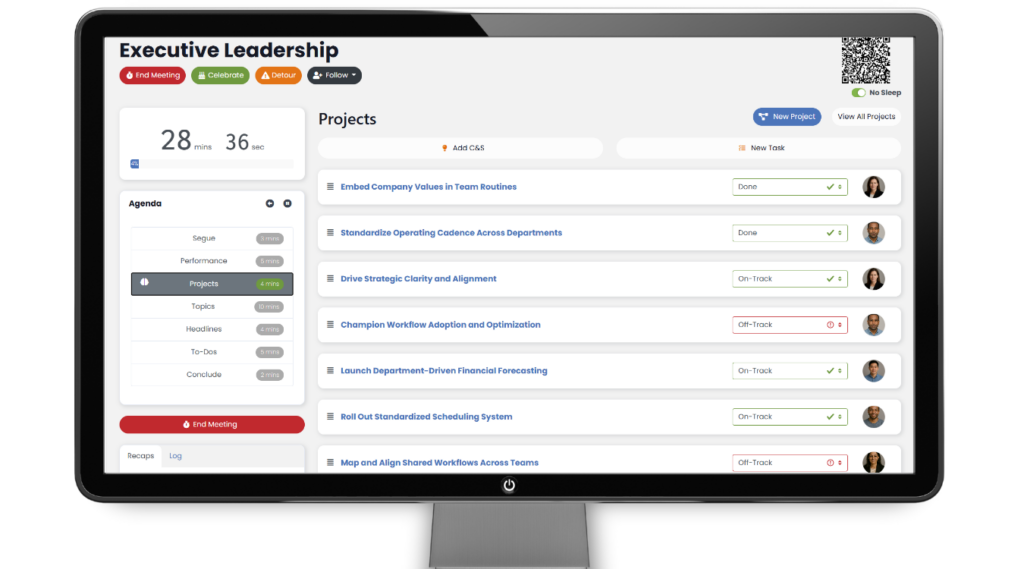
When you enter a meeting in Performance Scoring, everything you need is already organized around the purpose of the conversation. Agendas provide structure, while relevant performance data, goals, and historical context are visible so teams can spend less time recapping and more time deciding. This makes meetings faster, clearer, and far more productive—especially for recurring team meetings and 1:1s.
Navigation inside a meeting is intentionally intuitive. Agendas guide the flow, helping facilitators keep discussions focused and on track. Notes and decisions are captured in real time, eliminating the need for post-meeting clean-up or follow-up emails. Tasks and action items can be assigned directly during the meeting, ensuring accountability is clear before anyone leaves the room.
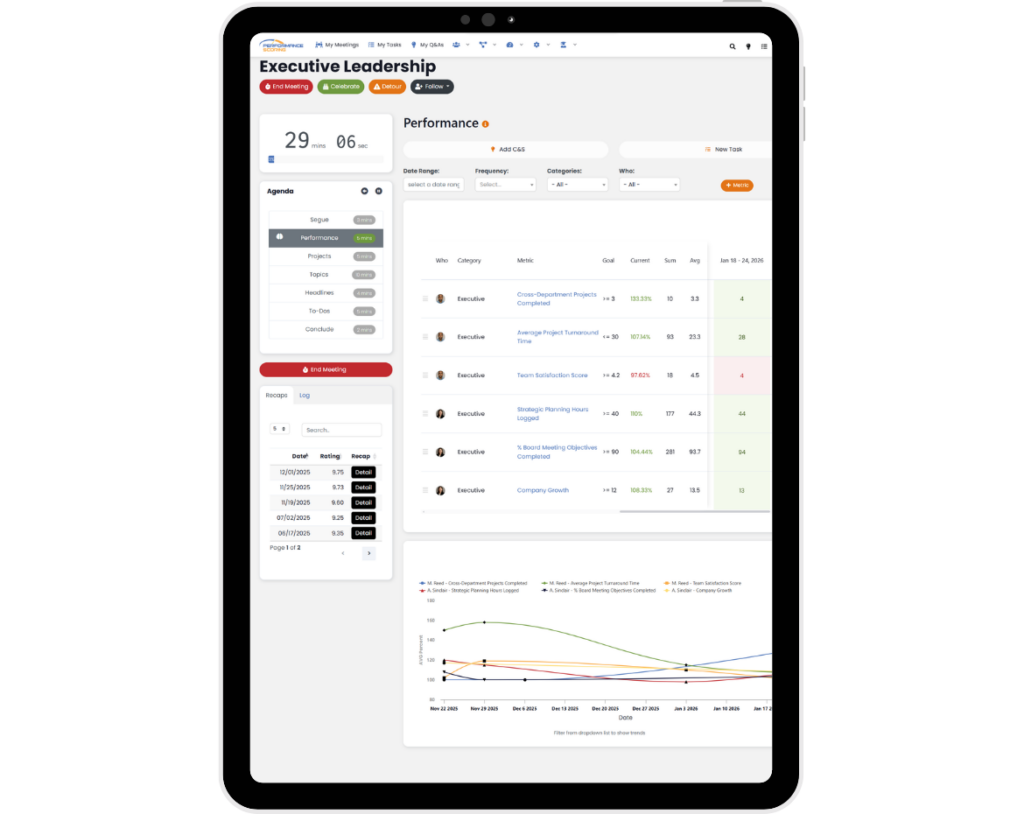
One of the platform’s biggest advantages is how meetings connect to the rest of Performance Scoring. Conversations aren’t isolated—they link directly to goals, KPIs, projects, and performance insights. This allows teams to see how today’s discussion impacts long-term objectives and individual performance without switching tools or losing context.
For managers, this creates better coaching conversations. Instead of relying on memory or subjective impressions, leaders can reference real data during meetings and document coaching moments as they happen. For employees, meetings become more transparent and actionable, with clear expectations and documented next steps.
Over time, meetings build momentum instead of repetition. Because Performance Scoring preserves meeting history, teams can review past decisions, track progress on action items, and spot trends. Recurring meetings become smarter and more efficient because nothing is lost between sessions.
Why Meetings Still Matter (When Done Right)
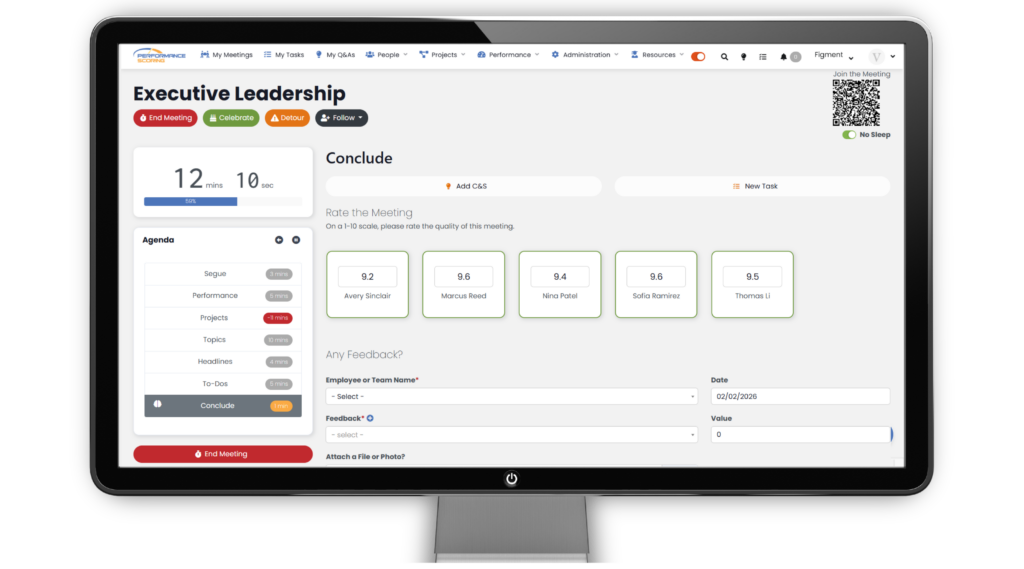
Meetings are one of the few moments where alignment, clarity, and accountability can happen in real time. Research consistently shows that effective meetings improve decision quality, strengthen relationships, and increase follow-through—while poorly run meetings do the opposite. When meetings have clear structure, shared context, and documented outcomes, they become a force multiplier rather than a drain. This is especially true when meetings are used to connect goals, performance data, and next actions instead of existing as isolated conversations.
High-performing organizations don’t eliminate meetings—they redesign them. Studies show that teams with focused agendas, clear ownership, and visible action items experience higher engagement and productivity. The key shift is treating meetings as working sessions rather than status updates. When discussions are captured, decisions are recorded, and responsibilities are assigned in the moment, meetings stop being repetitive and start driving measurable progress across teams.
References and additional resources:
Harvard Business School (research summary): “Stop the Meeting Madness”
https://www.hbs.edu/faculty/Pages/item.aspx?num=52836
Harvard Business Review topic hub: Meeting Management (collection of meeting research + articles)
https://hbr.org/topic/subject/meeting-management
Microsoft Work Trend Index (WorkLab): “Breaking down the infinite workday”
https://www.microsoft.com/en-us/worklab/work-trend-index/breaking-down-infinite-workday
Harvard Business Publishing PDF: “Break Up Your Big Virtual Meetings”
https://www.harvardbusiness.org/wp-content/uploads/2020/05/HBR-Break-up-your-Big-Virtual-Meetings.pdf