Most businesses have a plan.
It might live in a strategic planning document, a spreadsheet, a presentation, or even a notebook from the last leadership retreat.
The bigger question is:
Is your team actually working from it?
A Business Plan shouldn’t be something leadership creates, reviews occasionally, and then puts away until the next planning session. It should help guide the decisions, priorities, and work happening across the organization every day.
That’s where the connection between planning and execution becomes so important.
A Business Plan Is Only the Beginning
Creating a Business Plan can bring tremendous clarity to an organization.
It establishes where the company is going, what matters most, and what leadership wants to accomplish.
But the plan itself doesn’t create results.
Execution does.
Think about the different layers of your business:
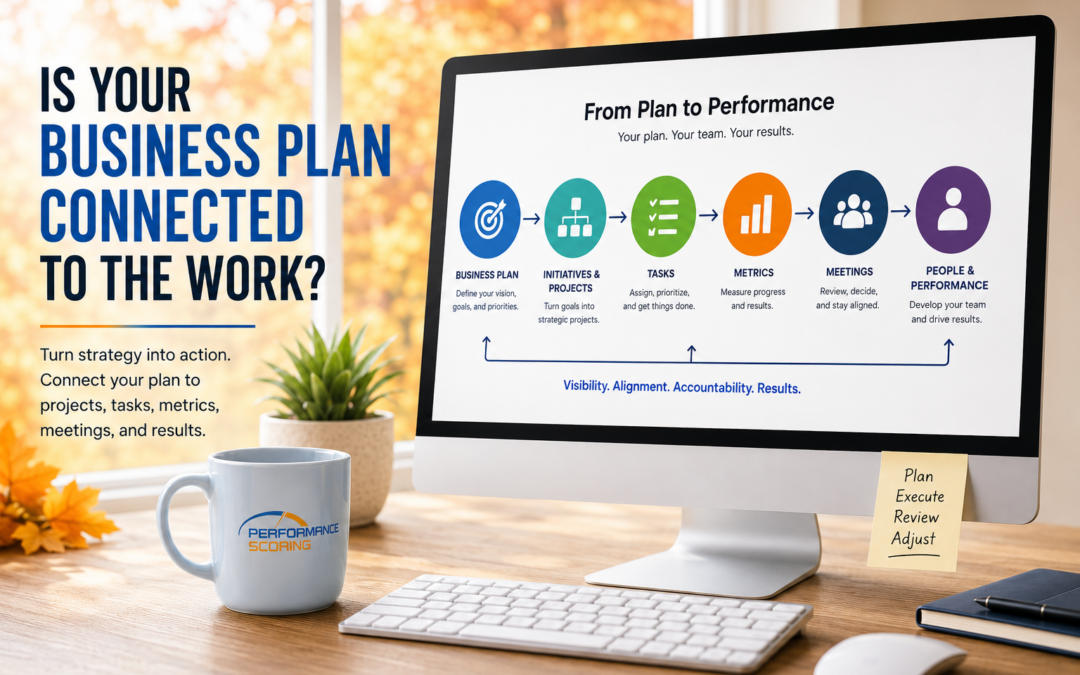
Vision → Goals → Initiatives → Projects → Tasks → Metrics → People
Each layer should support the one before it.
When they’re connected, employees can better understand not only what they’re responsible for, but also why their work matters to the bigger picture.
When they’re disconnected, even a great strategy can become difficult to execute.
The Strategy-to-Execution Gap
One of the most common challenges businesses face isn’t a lack of ideas or goals.
It’s the space between deciding what the company wants to accomplish and turning those decisions into consistent action.
Leadership may establish a major company goal, but then what?
Who owns it?
What Projects need to happen?
What Tasks move those Projects forward?
Which Metrics tell you whether you’re making progress?
When should progress be discussed?
How will leadership know if something starts falling behind?
Without those connections, strategic priorities can slowly turn into items everyone remembers discussing but no one is actively driving forward.
Turn Business Goals Into Visible Action
Imagine one of your company’s goals for the year is to increase customer retention.
That’s a good goal, but it’s still just a destination.
To execute it, your team might create Projects around improving onboarding, strengthening customer communication, or developing a more consistent client feedback process.
Those Projects create Tasks.
The Tasks have owners and deadlines.
Metrics help measure whether retention is actually improving.
Leadership meetings provide an opportunity to review progress, discuss obstacles, and determine what needs to happen next.
Now the goal isn’t sitting in a planning document.
It’s connected to the work.
Everyone Should Know How Their Work Connects
Connecting strategy and execution isn’t only valuable for leadership.
It can create greater clarity throughout the organization.
People want to know what’s expected of them, but they also benefit from understanding how their responsibilities contribute to something larger.
When someone can see:
Here’s what the company is trying to accomplish.
Here’s what our team is responsible for.
Here’s what I’m responsible for.
Here’s how we’ll know if we’re succeeding.
…the Business Plan becomes much more than a leadership exercise.
It becomes a working part of the business.
Your Meetings Should Connect to the Plan Too
Meetings are another important piece of the puzzle.
Leadership teams often spend significant time discussing immediate problems. That’s necessary, but urgent conversations can easily push strategic priorities into the background.
Your recurring meetings should provide opportunities to look at the work that’s driving the plan.
Are Projects moving?
Are Metrics on track?
Are Tasks getting completed?
Have new obstacles appeared?
Does something need additional resources or leadership attention?
When your Business Plan, execution, and meetings are connected, leadership can continually bring the conversation back to what matters most.
Visibility Helps You Adjust Earlier
No Business Plan unfolds exactly as expected.
Priorities change.
Markets change.
Customers change.
People change.
New opportunities appear.
The goal isn’t to create a rigid plan and follow it regardless of what happens.
The goal is to have enough business visibility to recognize when something needs to change.
If an important Metric begins moving in the wrong direction, you can investigate.
If a Project repeatedly falls behind, you can address the obstacle.
If priorities shift, leadership can adjust the work accordingly.
The sooner you can see what’s happening, the sooner you can decide what to do about it.
Connecting Planning and Execution With Performance Scoring
Performance Scoring is designed to help bring these pieces together.
Instead of your Business Plan existing separately from the day-to-day operation of the company, you can use Performance Scoring to create greater visibility across your:
- Business Plan for direction and strategic priorities
- Initiatives and Projects for the work driving your goals
- Tasks for individual action and accountability
- Metrics for measurable progress
- Meetings for discussion, decisions, and follow-through
- People and performance for visibility into who’s helping move the organization forward
The result is a more connected view of where you’re going, what’s being done, and how you’re progressing.
Put Your Business Plan to the Test
Here’s a simple question to ask your leadership team:
Can we take our biggest business priority right now and clearly trace it to the work being done this week?
Can you identify who’s responsible?
Can you see the Projects supporting it?
Can you see the Tasks moving those Projects forward?
Can you measure progress?
Can you tell whether it’s on track?
If the answer is yes, your Business Plan is doing more than documenting your strategy. It’s helping drive execution.
If not, there may be an opportunity to create a stronger connection between your plan and the work happening every day.
See Your Business More Clearly
This is the third article in our September See Your Business More Clearly series.
We’ve looked at business visibility and understanding the overall health of your organization. Now we’ve connected the Business Plan to execution.
Next, we’re moving into Week 2: See the Work, where we’ll start with one of the places execution happens every week:
Your meetings.
Because a productive meeting shouldn’t end when everyone leaves the room. It should create clarity, decisions, action, and accountability.
Ready to Connect Your Plan to the Work?
Performance Scoring helps bring your Business Plan, Projects, Tasks, Metrics, Meetings, and people performance together in one platform, giving leadership greater visibility from strategy through execution.
Visit PerformanceScoring.com or email us at support@performancescoring.com to learn more or take the 30-Day Business Challenge and experience the platform with your own team.
References and further reads:
MIT Center for Information Systems Research – Build Business Advantage With Real-Time Decision-Making
MIT CISR article
McKinsey & Company – Organizational Health: A Fast Track to Performance Improvement
McKinsey article
Harvard Business Review – Making Your Strategy Work on the Frontline
Harvard Business Review article