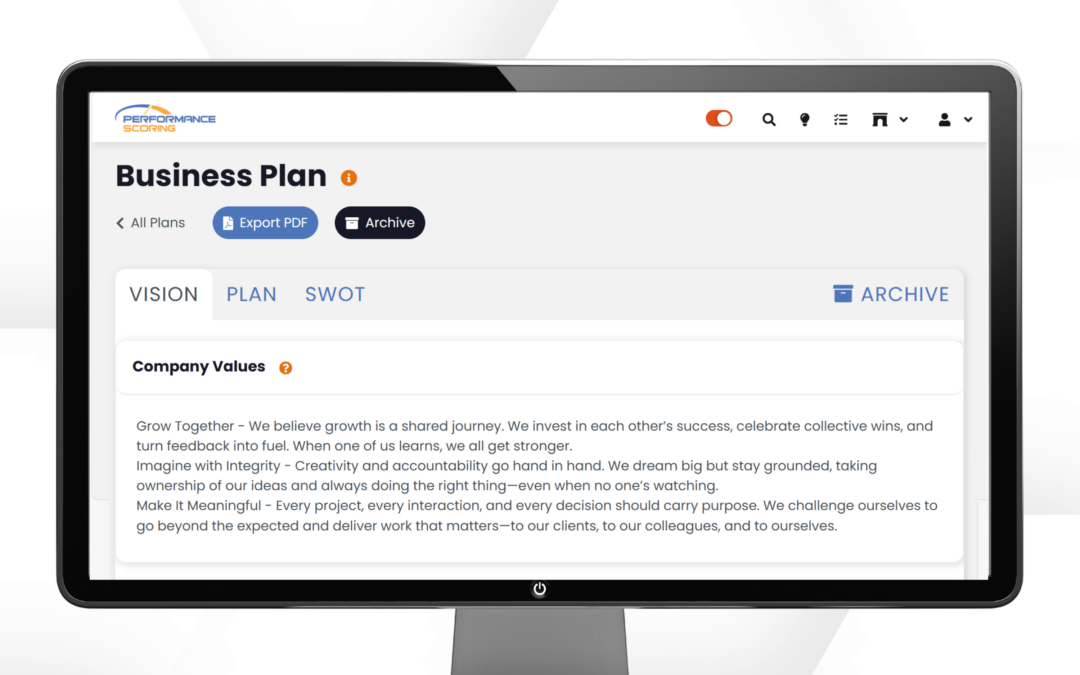
Your Business Plan in Performance Scoring is organized into three unique sections designed to guide you and your team. These sections help break long-term goals into smaller, bite-sized pieces, making them easier to understand, manage, and execute effectively.
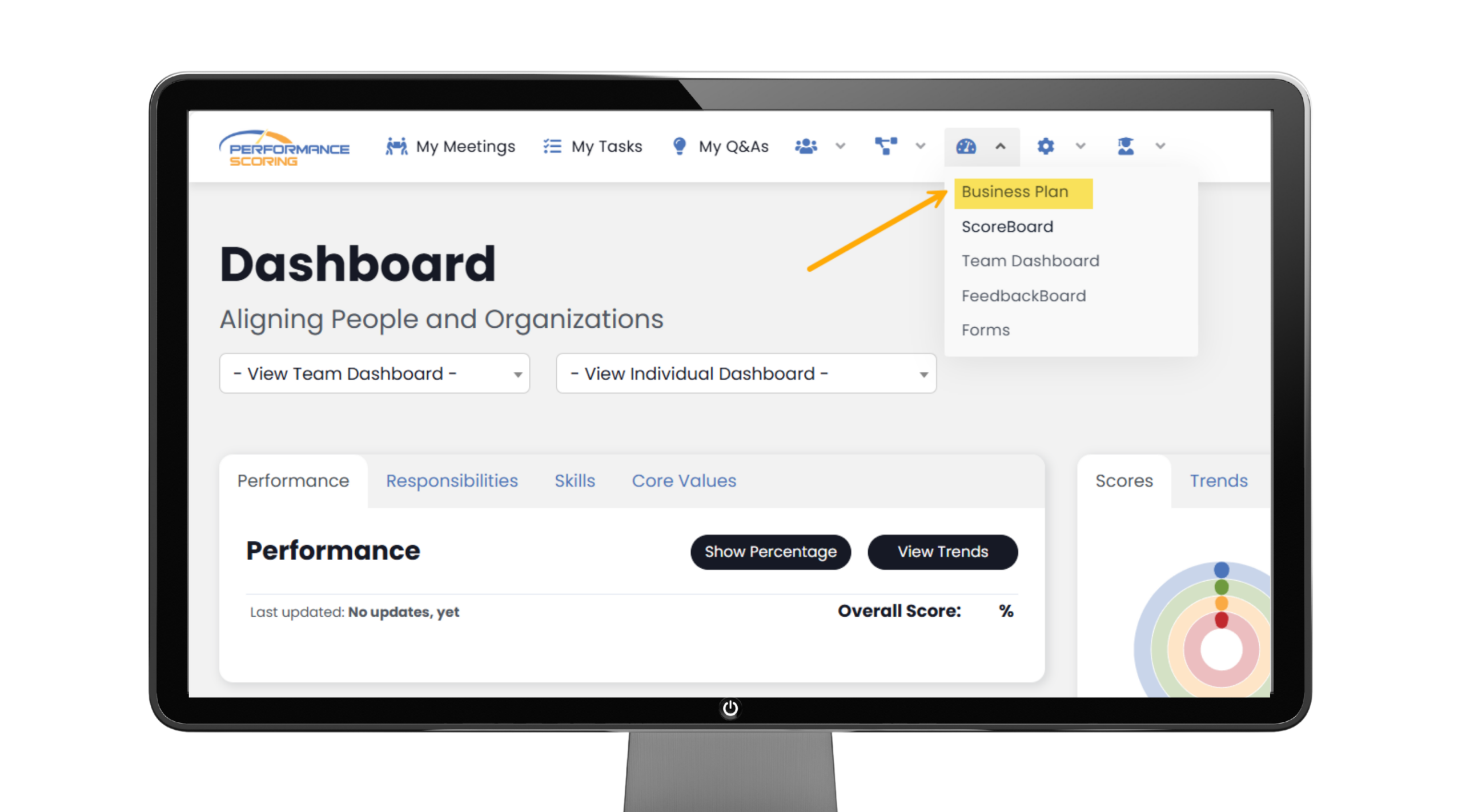
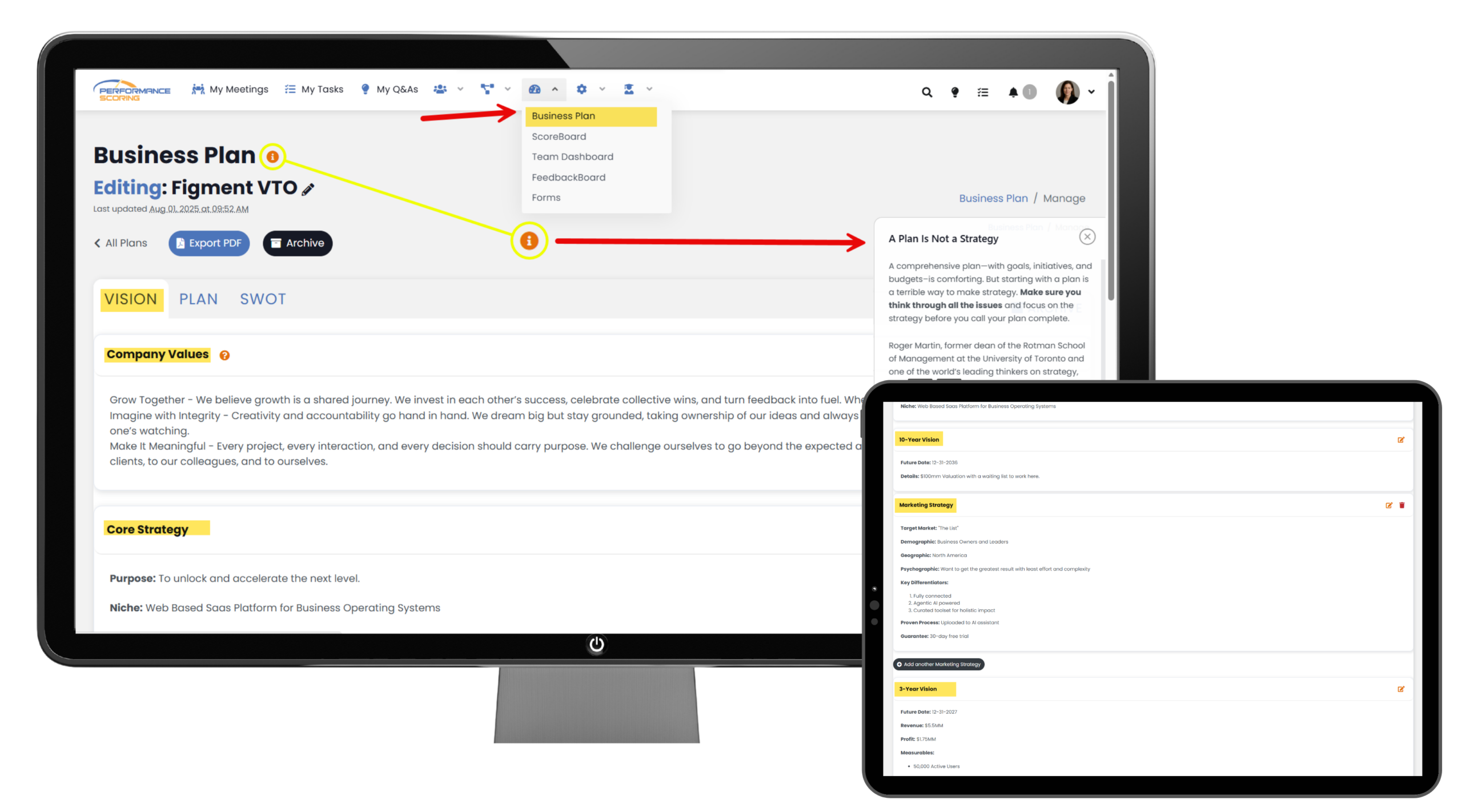
To create or edit your Business Plan, select the Performance icon from the top navigation panel and click Business Plan. From there, choose the + Add New button to create a new plan or select one of your existing business plans to make changes.
Vision
In Performance Scoring, the Vision section of the Business Plan is made up of several key components that define your long-term direction and purpose. These typically include:
- Core Values – the guiding principles that define your culture
- Core Focus – your purpose and niche
- 10-Year Target – where the organization aims to be long term
- Marketing Strategy – who you serve, what you offer, and how you differentiate
- 3-Year Picture – a clear snapshot of what the business should look like in the near future
Together, these sections create a shared, strategic vision that aligns the team and sets the foundation for execution.
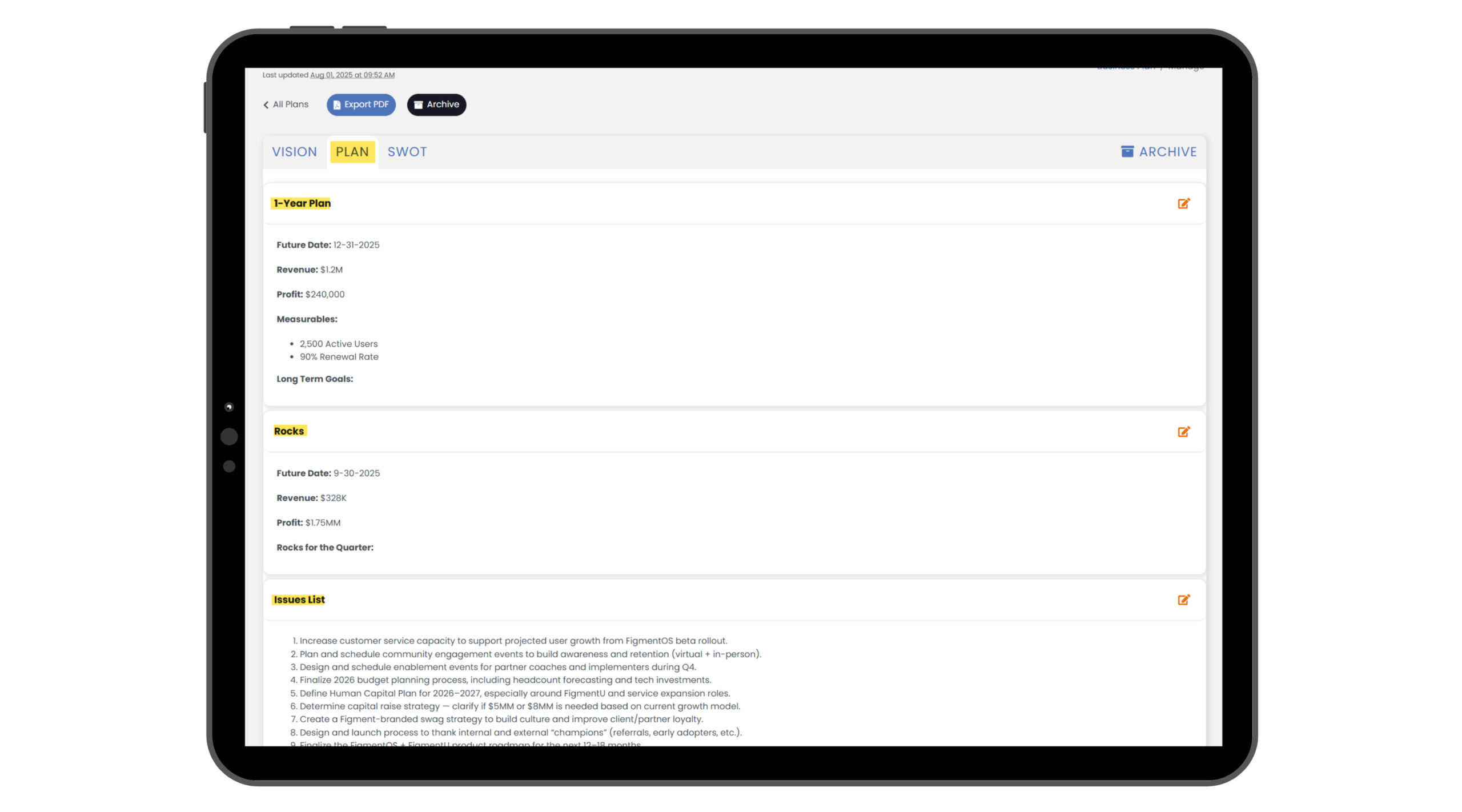
Plan
The Plan section of the Business Plan in Performance Scoring focuses on turning your vision into actionable priorities. It typically includes the following sections:
- 1-Year Plan – defines the most important goals and outcomes to achieve in the next year
- Quarterly Priorities (Projects) – identifies the top priorities that must be completed in the next 90 days
- Scorecard / Key Metrics / Performance – tracks the numbers that indicate whether the plan is on track
This section bridges strategy and execution by clearly defining what needs to be accomplished, when it needs to happen, and how success will be measured.
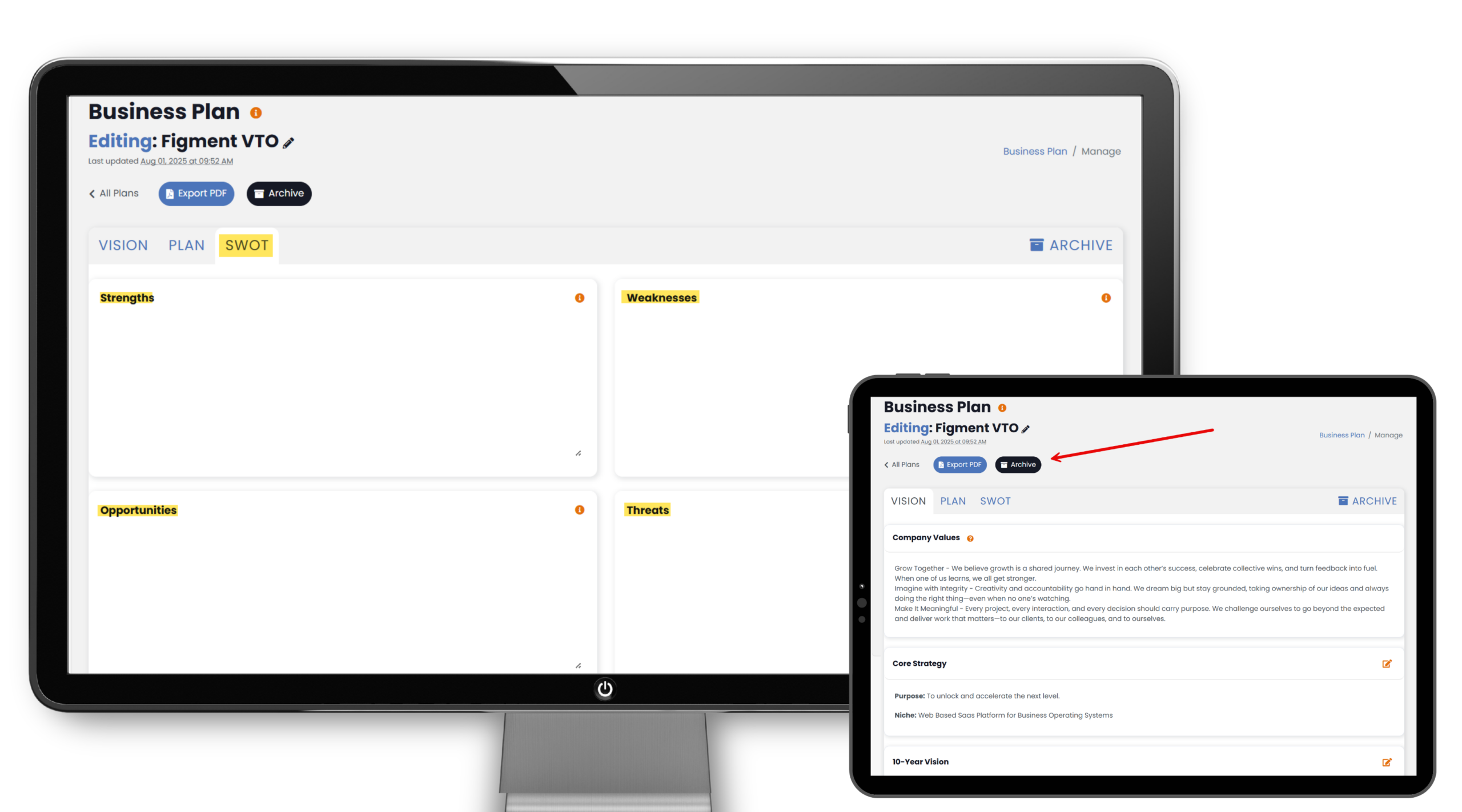
SWOT
The SWOT section of the Business Plan in Performance Scoring is used to evaluate your organization’s current position and includes four core areas:
- Strengths – internal advantages your organization does well
- Weaknesses – internal challenges or areas for improvement
- Opportunities – external factors you can leverage for growth
- Threats – external risks or obstacles that could impact success
Together, these sections help teams gain clarity, identify gaps, and make more informed strategic decisions.
Before editing your Business Plan, be sure to click the Archive button to capture a historical snapshot of your current plan. This preserves a record of past versions and allows you to track changes and progress over time.
➜ See full Knowledge Base training article here.
Further Reading (External Resources)
• Why Is Strategic Planning Important? — Harvard Business School Online explains how strategic planning aligns goals, allocates resources, and creates a shared forward-focused vision.
https://online.hbs.edu/blog/post/why-is-strategic-planning-important
• The Leader’s Guide to Strategic Thinking — Harvard Business Impact explores what strategic thinking involves and how leaders develop insight, planning, and action skills.
https://www.harvardbusiness.org/insight/september-2025-the-leaders-agenda-the-leaders-guide-to-strategic-thinking/
• Discovery-Driven Planning — A Harvard Business Review-cited planning methodology that helps teams build flexible plans when navigating uncertainty.
https://en.wikipedia.org/wiki/Discovery-driven_planning
• How to Turn a Strategic Vision Into Reality — MIT Sloan highlights how to refine and translate broad vision into actionable priorities and goals.
https://mitsloan.mit.edu/ideas-made-to-matter/how-to-turn-a-strategic-vision-reality
• Executing Strategy for Results — An MIT OpenCourseWare resource outlining models and tools for effective strategy execution and performance alignment.
https://mitocw.ups.edu.ec/courses/sloan-school-of-management/15-361-executing-strategy-for-results-fall-2017/