
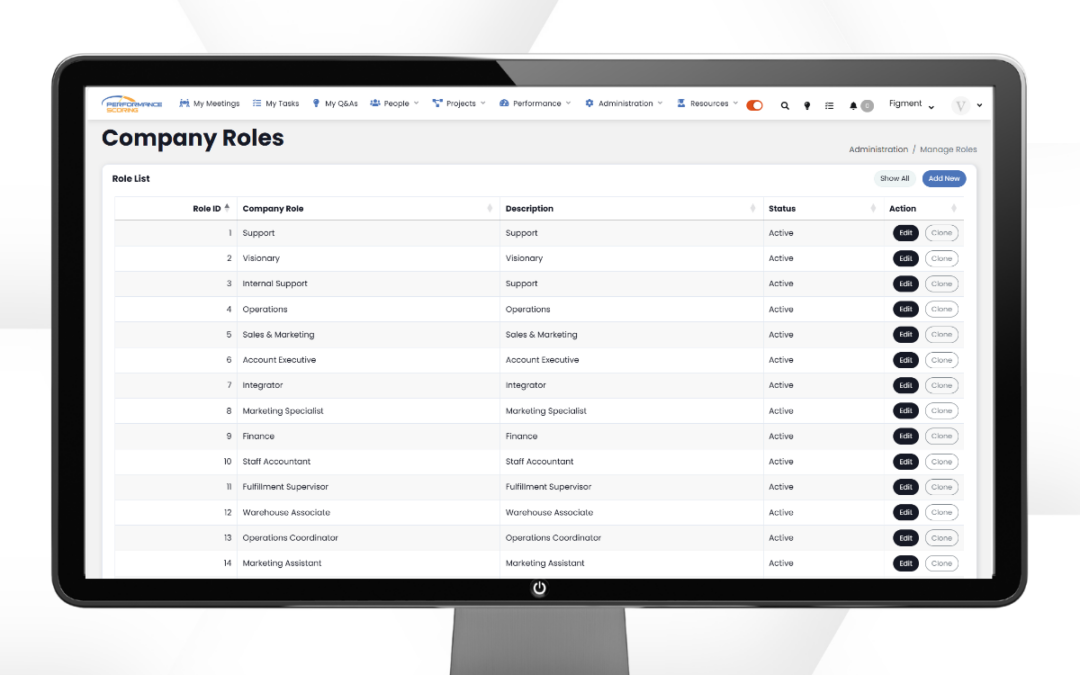
Managing roles in Performance Scoring ensures that every user has the correct access, visibility, and responsibilities inside the platform. When roles are set up properly, your meetings run smoother, your reporting structure stays clear, and your data remains secure.
This guide walks you through how to view, create, and manage roles effectively.
Understanding Roles in Performance Scoring
Roles determine what users can see and do inside the platform. Instead of assigning permissions to individuals one-by-one, Performance Scoring uses roles to keep access consistent and organized.
Each role includes:
- Permission settings (what the user can access)
- Assigned responsibilities
- Skills tied to performance reviews
- Visibility into meetings, metrics, and administration features
Common examples include Executive, Manager, and User-level roles — but these can be customized to match your organization’s structure.
Best Practice:
Assign permissions based on the seat (role) someone fills — not the person. This keeps things clean as employees change or responsibilities shift.
Editing and Creating Roles
To manage roles:
- Click the Administration (gear icon) in the top navigation.
- Select Manage Roles.
- Choose an existing role to edit or click Add New Role.
Editing a Role
When editing a role, you can:
- Adjust permissions (meetings, metrics, dashboards, administration, etc.)
- Update responsibilities
- Modify skills (used in performance reviews)
- Control access to reporting and visibility tools
Be thoughtful when adjusting permissions, especially administrative access, as changes take effect immediately.
Creating a New Role
To create a new role:
- You can clone an existing role to copy its permissions.
- Or select Add New and build one from scratch.
- Assign a clear role name.
- Define responsibilities and skills.
- Configure permission levels (Executive, Manager, or Employee access tabs).
- Click Save.
Cloning is often the fastest way to create a role with similar permissions while making small adjustments.
Role Management Best Practices
Managing roles effectively keeps your platform secure and aligned.
Keep It Simple
Avoid creating too many custom roles unless necessary. Most organizations operate well with a handful of clearly defined roles.
Limit Administrative Access
Only grant high-level permissions to users who truly need them. This protects sensitive data and prevents accidental changes.
Review Roles Regularly
As your organization grows or restructures, revisit roles to ensure permissions still match responsibilities.
Think Long-Term
Roles impact:
- The Accountability Chart™
- Reporting structure
- Meeting visibility
- Metric ownership
- Performance reviews
Taking a few extra minutes to set them up correctly will save hours of confusion later.
When roles are managed properly, Performance Scoring becomes easier to use, more secure, and better aligned with how your organization actually operates.
See full training article here.
Additional training material: